Women Between Peace and war: Afghanistan
Tracing the Crisis of the Family in a Country Under Siege
About the Project
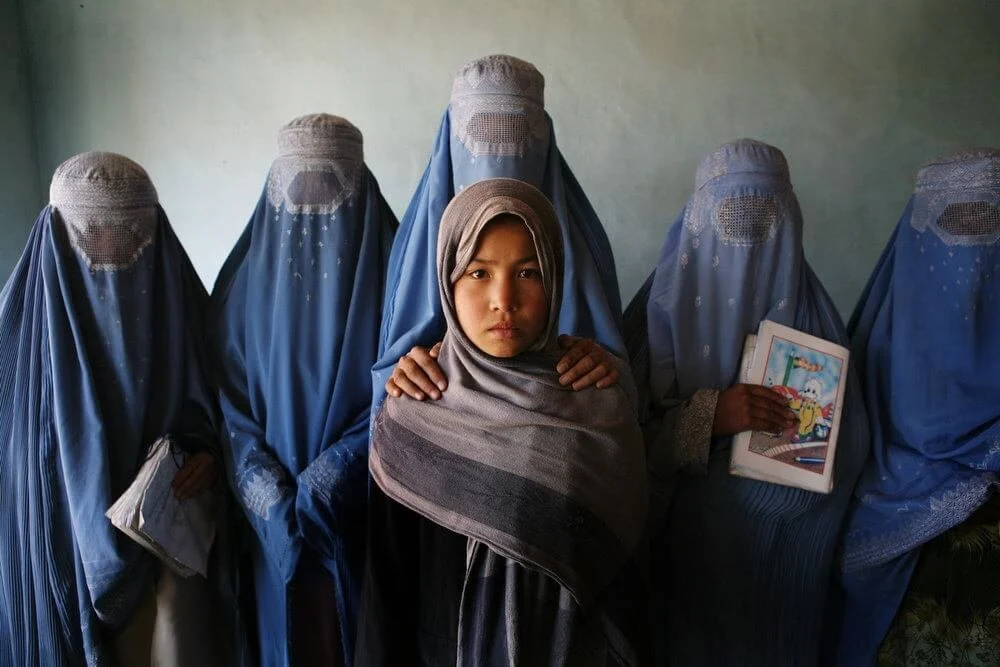
Women and girls are the cornerstone of rebuilding peace in Taliban-controlled Afghanistan. The eroding effects of gender inequality, poverty, and lack of access to healthcare and education, however, have become the abhorrent and seemingly impermeable mainstays in many women’s lives. Establishing Afghan women as community actors lies in empowering them as political leaders. Only then can a shared vision of harmony, balance, and freedom ensue. Investment in women is an investment in peace.
When this exhibit began in 2012, the government of Afghanistan was engaged in major military actions to gain control over Taliban-influenced areas. However, today we know that in September 2021, the Taliban took over the country following the withdrawal of all international troops. Before 2021, women and girls had very limited opportunities. After September 2021, the Taliban stripped them of their human rights, removed them from jobs, barred them from attending secondary school, prohibited them from traveling, and forced them to wear face coverings.
Women Between Peace and War, designed as an international awareness campaign, ensures that the voices of women and girls remain heard amid international military and political engagement in Afghanistan. Over the decades, the political, social, and cultural landscape of Afghanistan has changed significantly. Because of these changes, women have been excluded from public life and have had almost all of their rights taken away. The voices and stories of these women need our attention as they face unimaginable violence, discrimination, and hardships. Women Between Peace and War highlights the stories of Afghan women and, in doing so, provides an opportunity to shed light on the current plight of women and girls in Afghanistan.
about the artistS
Lynsey Addario, an American photojournalist, has been covering conflict, humanitarian crises, and women’s issues around the Middle East and Africa for decades. She has covered conflicts in Afghanistan, Iraq, Libya, Lebanon, Darfur, South Sudan, Somalia, the Democratic Republic of Congo, Yemen, Syria, and the ongoing war in Ukraine.
Jean Chung is an award-winning photojournalist from South Korea who believes in the survival power of women in dire situations, such as war. After living in Afghanistan and Africa, she has been documenting the lives of women who were affected by war, such as pregnant mothers and survivors of sexual violence.
Ron Haviv is an Emmy-nominated filmmaker, award-winning photojournalist, and co-founder of the photo agency VII, dedicated to documenting conflict and raising human rights issues around the globe. He is also the co-founder of the non-profit VII Foundation, which concentrates on documentary projects and provides free visual journalism education.
Jared Moossy began in conflict photography, where he spent approximately 15 years capturing the raw realities of conflicts around the world. This experience eventually led him to transition into cinematography, where he continued to use his philanthropic perspective to capture the struggles and beauty of those affected by these conflicts.
Moises Saman blends traditional conflict photography with a deeply personal point of view. For over a decade, he has prioritized the humanitarian impact of war in the Middle East, documenting both the front line of daily suffering and the “fleeting moments on the periphery of the more dramatic events.”
Stephanie Sinclair is known for securing unique access to the most sensitive gender and human rights issues worldwide. Her widely published images of the occupation of Iraq and the war in Afghanistan refute characterizations of violence in anything but human terms.
Abbie Trayler-Smith, an acclaimed portrait and documentary photographer, specializes in capturing people’s reactions and responses to events and social issues.
Véronique de Viguerie is a multi-awarded photojournalist represented by Getty Reportage and Verbatim Photo Agency. Some awards include: World Press Photo; Visa d’Or; Bayeux Prizes at the war correspondent festival; Canon Prize for best woman photographer; Lagardere prize for young photographer.
Farzana Wahidy is an award-winning Afghan documentary photographer. She has been documenting the lives of Afghan women and girls for nearly two decades. Wahidy was the first female photographer in Afghanistan to work with international media agencies.
Public Programs
-
October 6, 2026 | The Hague
The Hague Humanity Hub and Art Works present an exhibit, film excerpt, and discussion event. -
September 11, 2026 | Chicago
The Rule of Law Institute at Loyola University Chicago School of Law and Art Works present an exhibit, film excerpt, and discussion event. -
October 24, 2013 | Finnish Parliament Annex, Helsinki, Finland
Special thanks to the Suomen UN Women who presented the exhibit. -
October 10, 2013 | Harvard Humanitarian Initiative
-
October 3, 2013
Asia Society, New York
Special thanks to speaker Ambassador Melanne Verveer, former United States Ambassador-at-Large for Global Women’s Issues
Suverine Caluwaerts of Doctors Without Borders and moderator Elizabeth Rubin. -
March 14, 2013
Rayburn House Office Building, DC
Featured photography by Lynsey Addario, Paula Bronstein, Jean Chung, Ron Haviv, Jared Moosey, Moises Saman, Stephanie Sinclair, Abbie Trayler-Smith, Veronique de Viguerie, and Farzana Wahidy. Art direction by de.MO -
March 6, 2013
ASF + Scandinavia House, New York
Special thanks to speakers Melanie Ward, ActionAid UK; Lynne Featherstone MP, Parliamentary Under-Secretary of State, UK Department for International Development; Shinkai Karokheil MP, Member of Parliament, Afghanistan; Mabel McKeown, Women in the World Foundation.
In partnership with Scandinavia House, Action Aid, and Women in the World Foundation. -
October 25, 2012
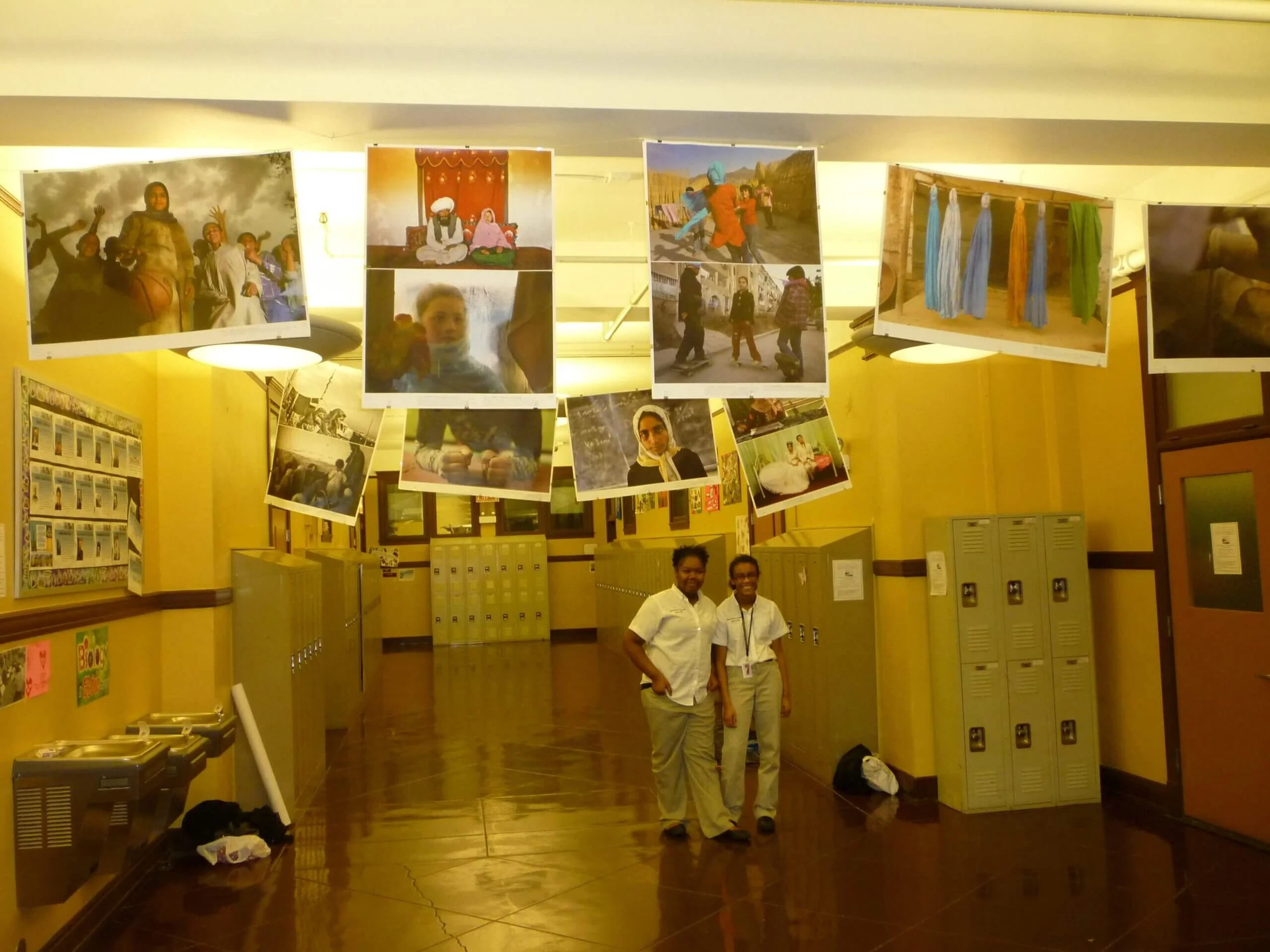
Young Women’s Leadership Charter, Chicago
-
May 20, 2012 Intercontinental Hotel, Chicago
Special thanks to speakers His Excellency Zalmai Rassoul, Afghan Foreign Minister and the Honorable Melanne Verveer.
AWP / FIELD
RELATED REFLECTION
The Sharp Edge of Peace: What We Heard About Afghanistan, Asylum, and Local Action
Afghan women’s rights leaders, immigration advocates, and Chicago community voices reflect on Afghanistan, asylum, resettlement, and the responsibilities that follow from bearing witness.
READ THE REFLECTION →
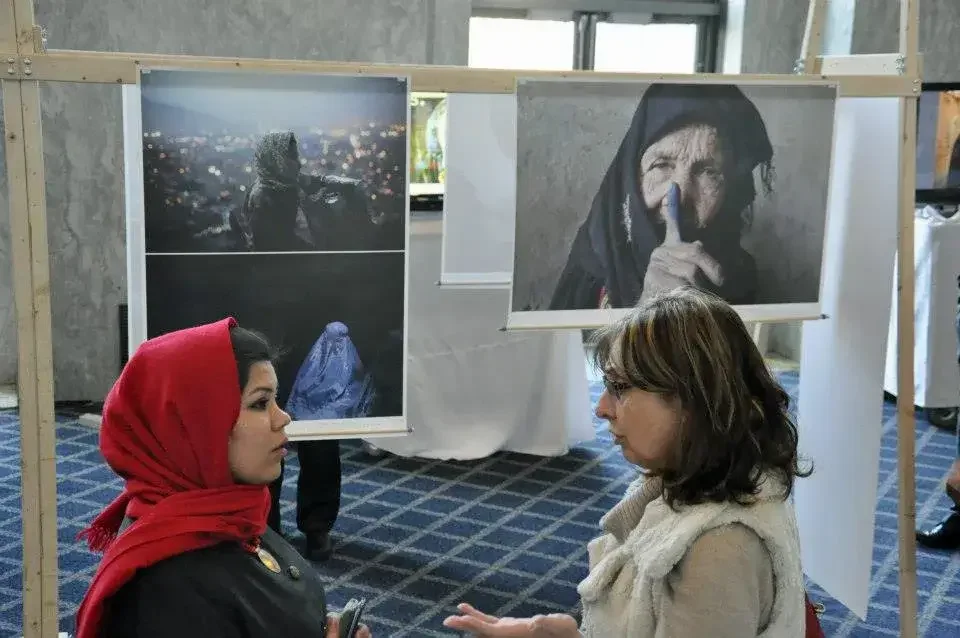
AWP exhibitions, designed for touring, are adaptable to venues of various types and sizes.
We are happy to provide step-by-step support for hosting this exhibit.
Contact us to learn more about bringing this exhibit to your community.
HOST AN exhibitION
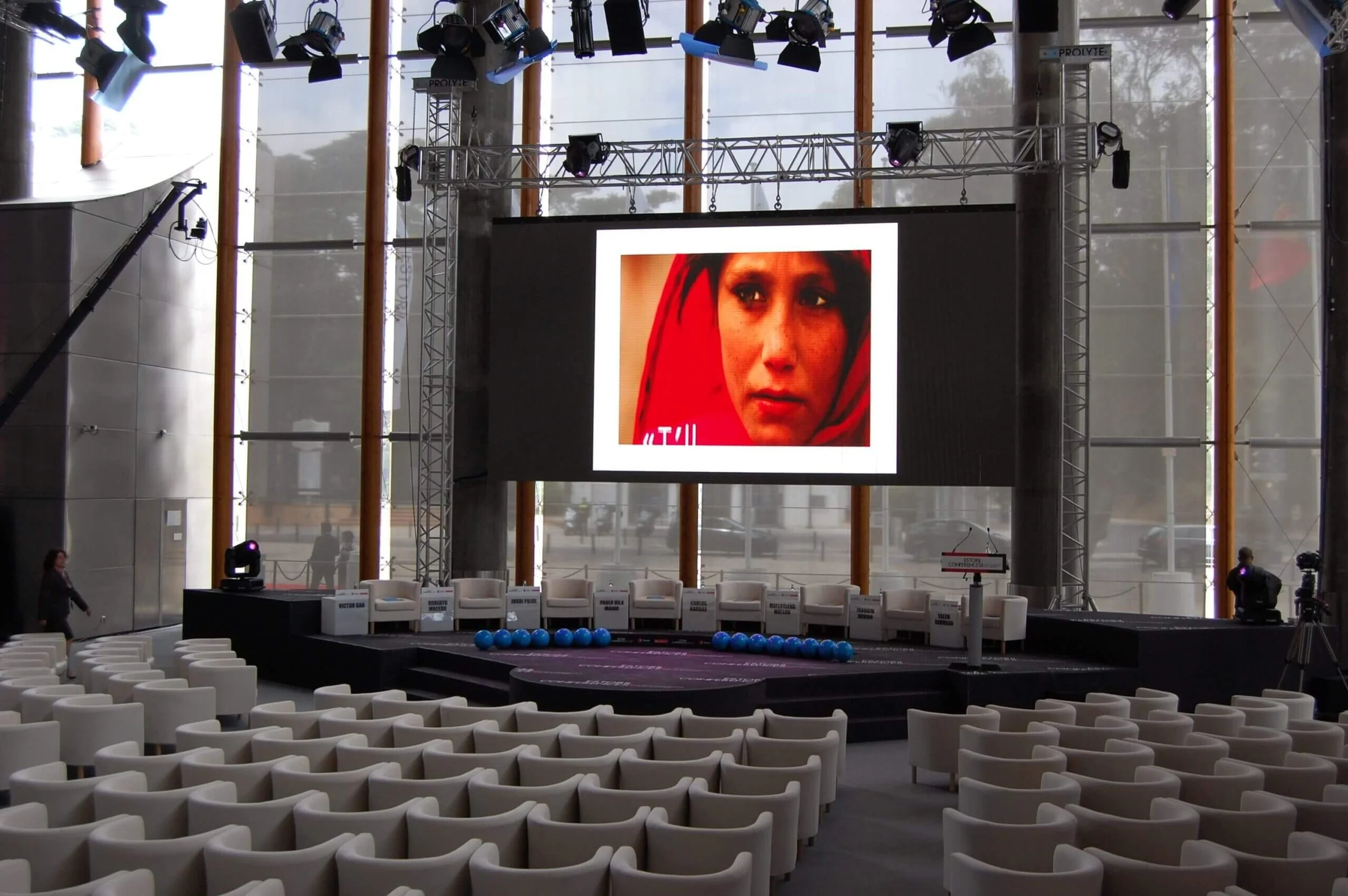
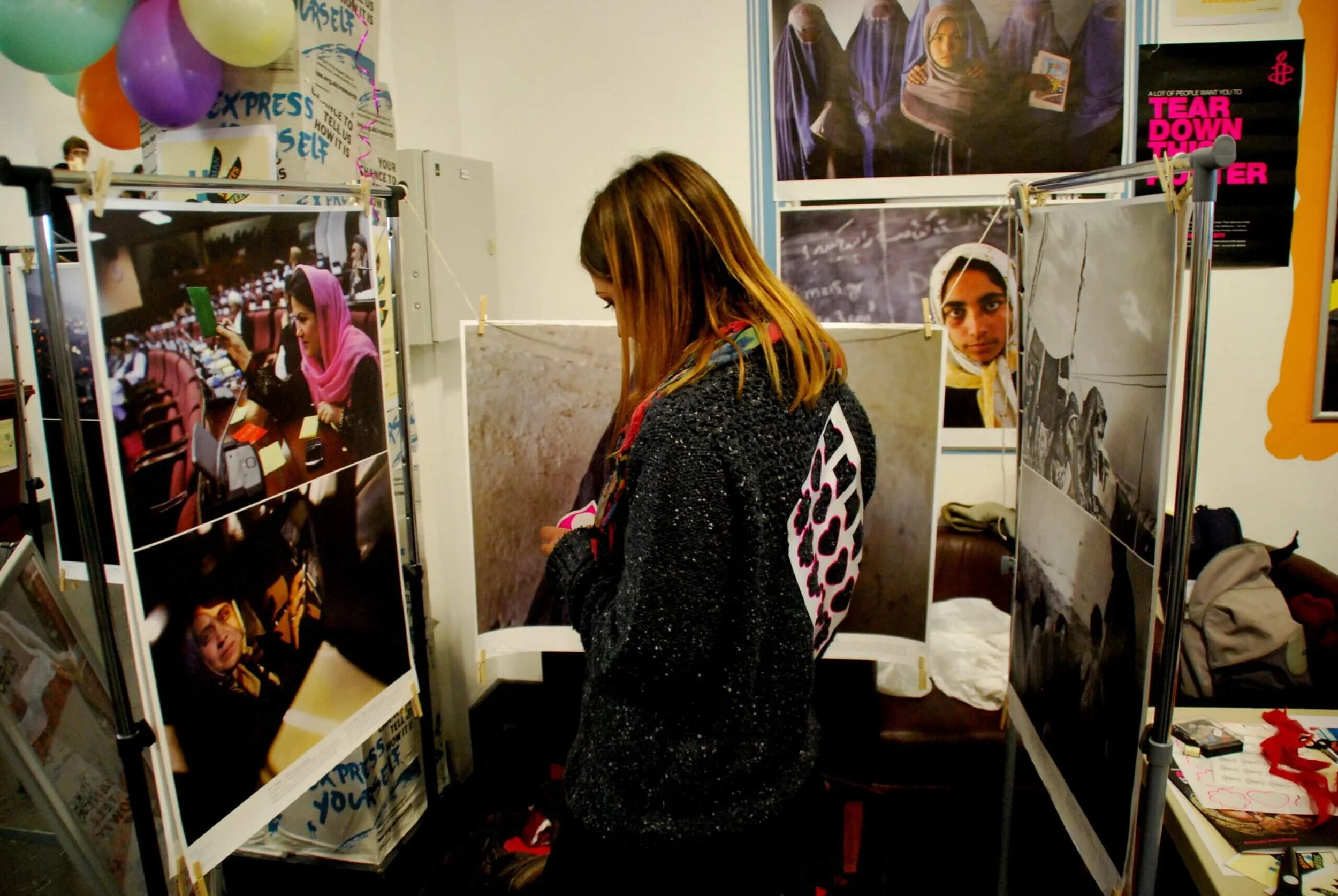
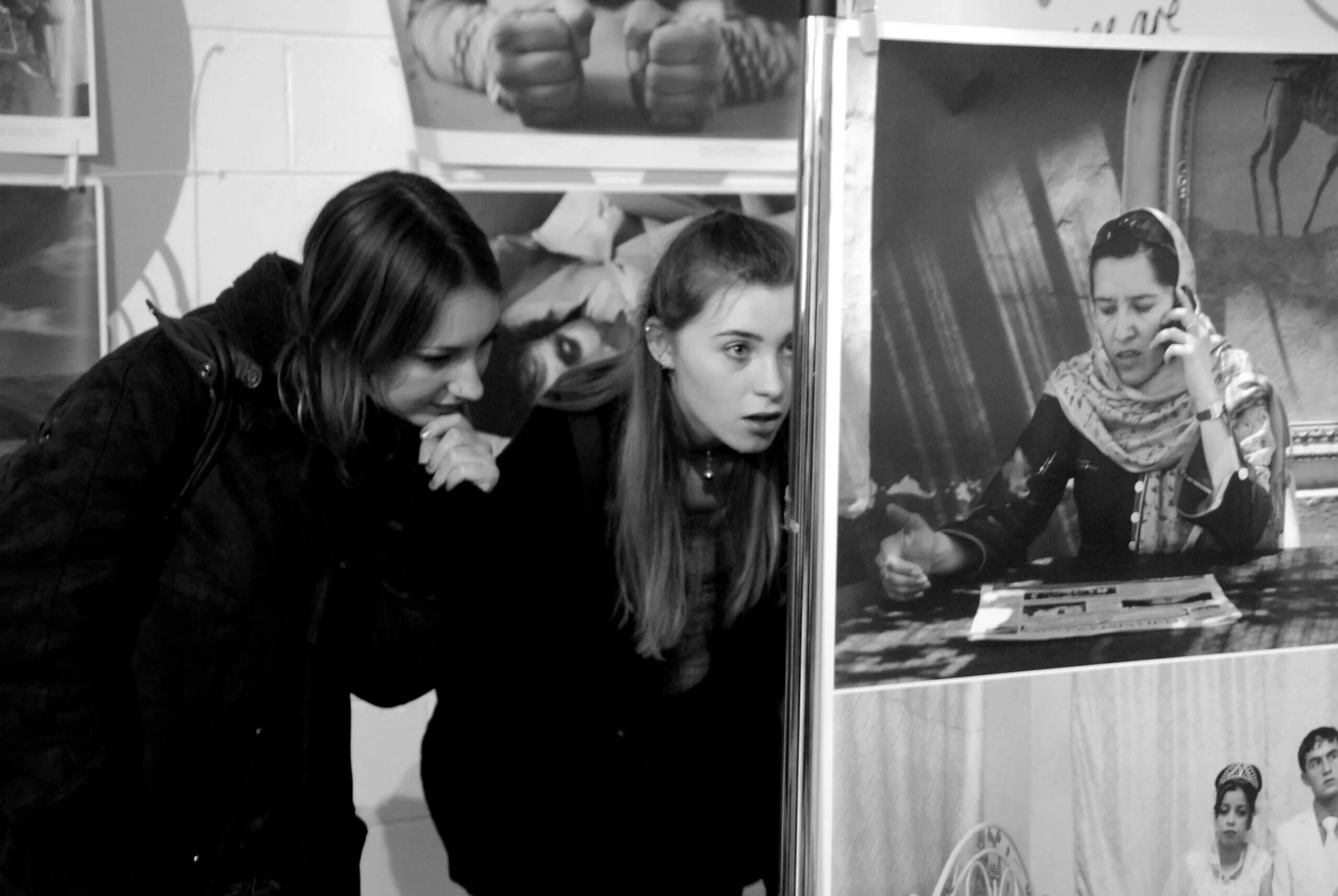
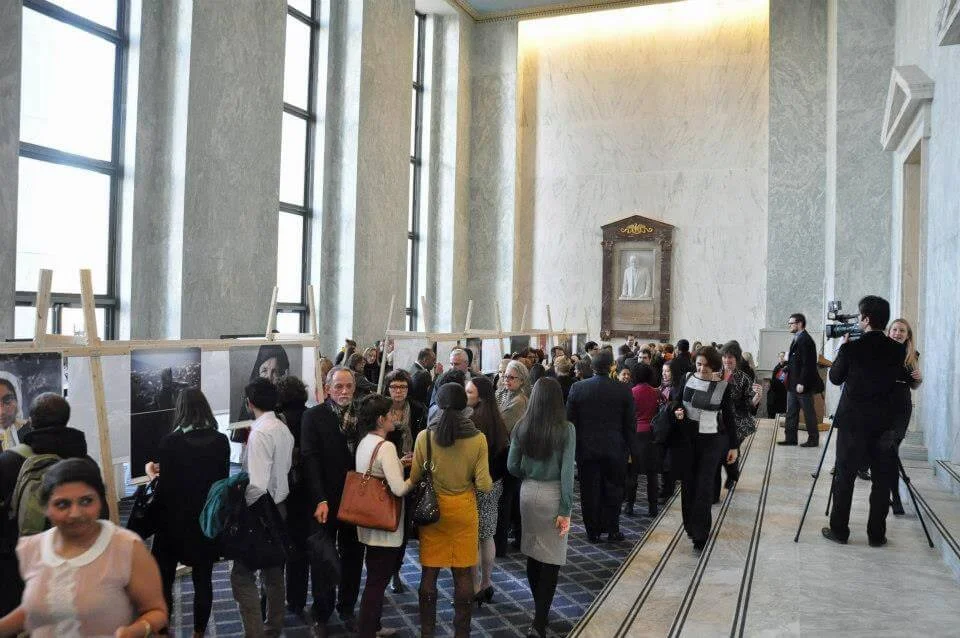
Installation of Women between Peace and War
resources & tools
News
June 2026: Amnesty International: New code enabling child marriage compounds dismal situation for Afghan women and girls
August 2025: UN WOMEN report: Four years of Taliban rule: Afghan women resist as restrictions tighten
August 2025: UN WOMEN FAQs: What it’s like to be a woman in Afghanistan today
March 2023: A UN report states that the Taliban takeover of Afghanistan has erased over 20 years of progress for women and girls due to the denial of their fundamental rights
Stats
Afghanistan risks losing up to 20,000 women teachers and 5,400 healthcare workers by 2030 as restrictions on girls’ education and women’s employment continue, according to UNICEF (April 2026).
In 2024, an estimated 3.8 million girls aged 7 to 18 were out of school, including more than 2.6 million adolescent girls (April 2026).
Since September 2021, the Taliban has banned girls from secondary school.
The impacts are devastating:78% of young Afghan women are not in education, employment or training – nearly four times the rate for young men.
By 2026, early childbearing is projected to rise by 45%.
Maternal mortality could increase by more than 50%.
24.4 million people – 5.5 million women and 6.3 million girls need humanitarian assistance (January 2022)
Amnesty International
Amnesty International has online resources for understanding the impact of the 2021 Taliban takeover in Afghanistan
PROJECT support
Women Between Peace and War is generously supported, in part, by SAPPI, Ideas that Matter, and UNWOMEN.
more of our work