
AWP / FIELD · Art Works Year 20
In The Mourning Tide, photographer Oyewole Lawal traces the cost of fashion’s throwaway cycle to the shores of Accra, where discarded clothing piles up and fishing communities live with the consequences.
By Art Works Projects and One Planet Port · November 27, 2026
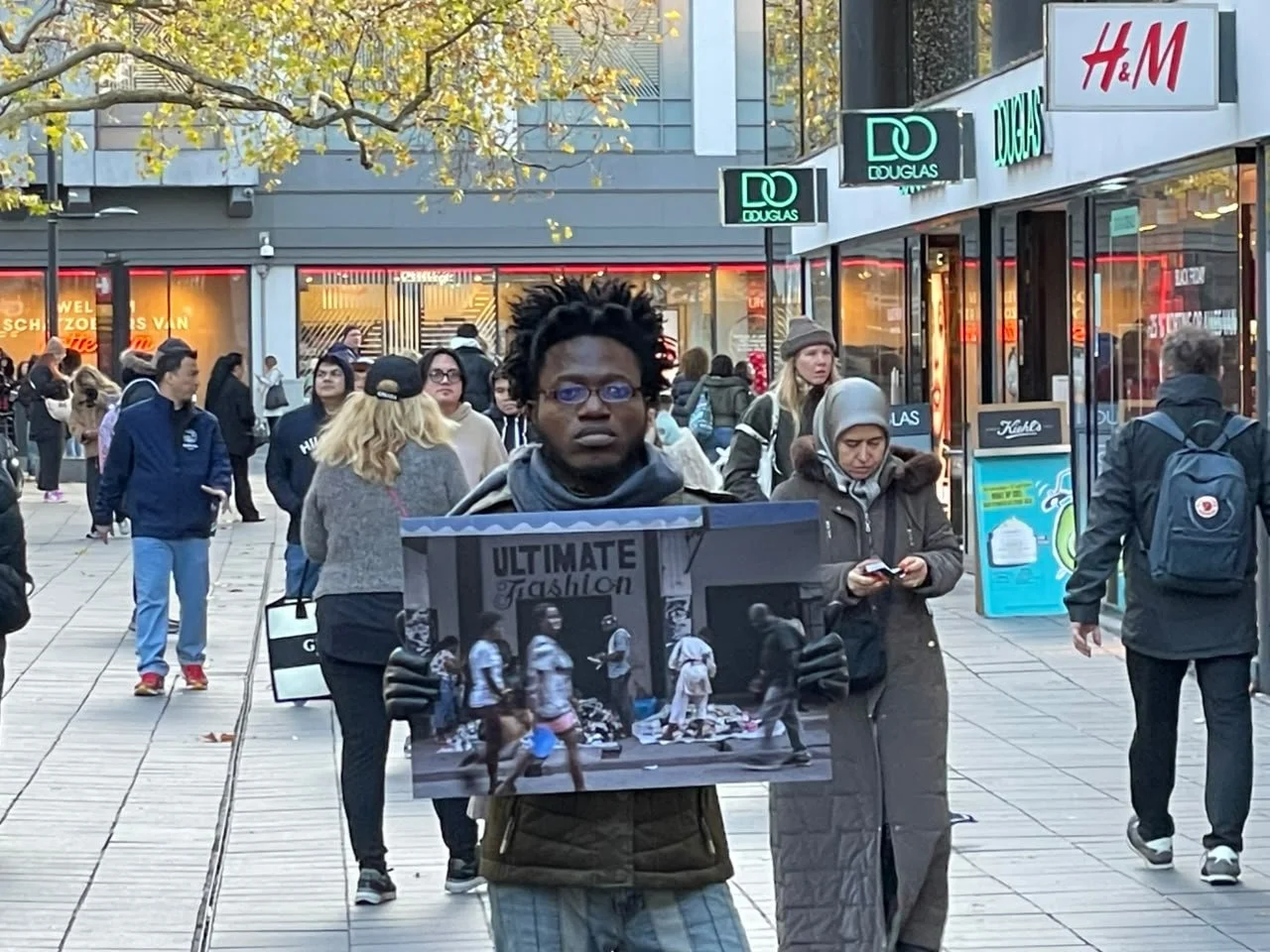
Oyewole Lawal holds a photographic print during filming with One Planet Port in Lijnbaan, a busy shopping district in central Rotterdam. Photo: One Planet Port.
Oyewole Lawal, an Art Works Projects (AWP) Emerging Lens fellow, and One Planet Port (OPP) went to Lijnbaan, a busy shopping district in central Rotterdam, to film where fashion brands sell their clothes. As shoppers passed, Lawal held up a photo of people walking past a storefront marked “ULTIMATE Fashion.” Behind him, another row of shops. Two shopping streets share a frame. What happens to the clothes after we let them go?
Lawal, in his photojournalistic work, The Mourning Tide, followed that question to the coast of Accra. In Jamestown, he saw discarded clothes and other debris accumulate along the shoreline. Fishers and residents spoke to him about water quality, declining fish stocks, and what those changes meant for making a living. His photographs pull us close to the cost that never shows on a price tag.
OPP, a Rotterdam-based organization, aims to transform ports to operate within planetary boundaries. The Port of Rotterdam is the logistical heart of Europe, a gateway through which oil, gas, raw materials, and products from around the world pass. That leaves its mark on the planet, from where goods come to where they eventually end up. OPP argues this gives ports a unique leverage; a change here ripples through the entire supply chain. Together with researchers, residents, and policymakers, OPP works toward a port that is clean, fair, and strong—and stays within the limits of what the planet can handle.
The secondhand clothing trade does make clothes affordable and gives people a livelihood. But when garments arrive damaged or unsellable, the burden falls on the communities that receive them.
At our November 6 meeting at BlueCity, Lawal pointed to artists and scientists in Ghana finding new uses for discarded textiles. He asked how much that work can accomplish if the fashion industry keeps producing more. Read Lawal’s account in The Punch.
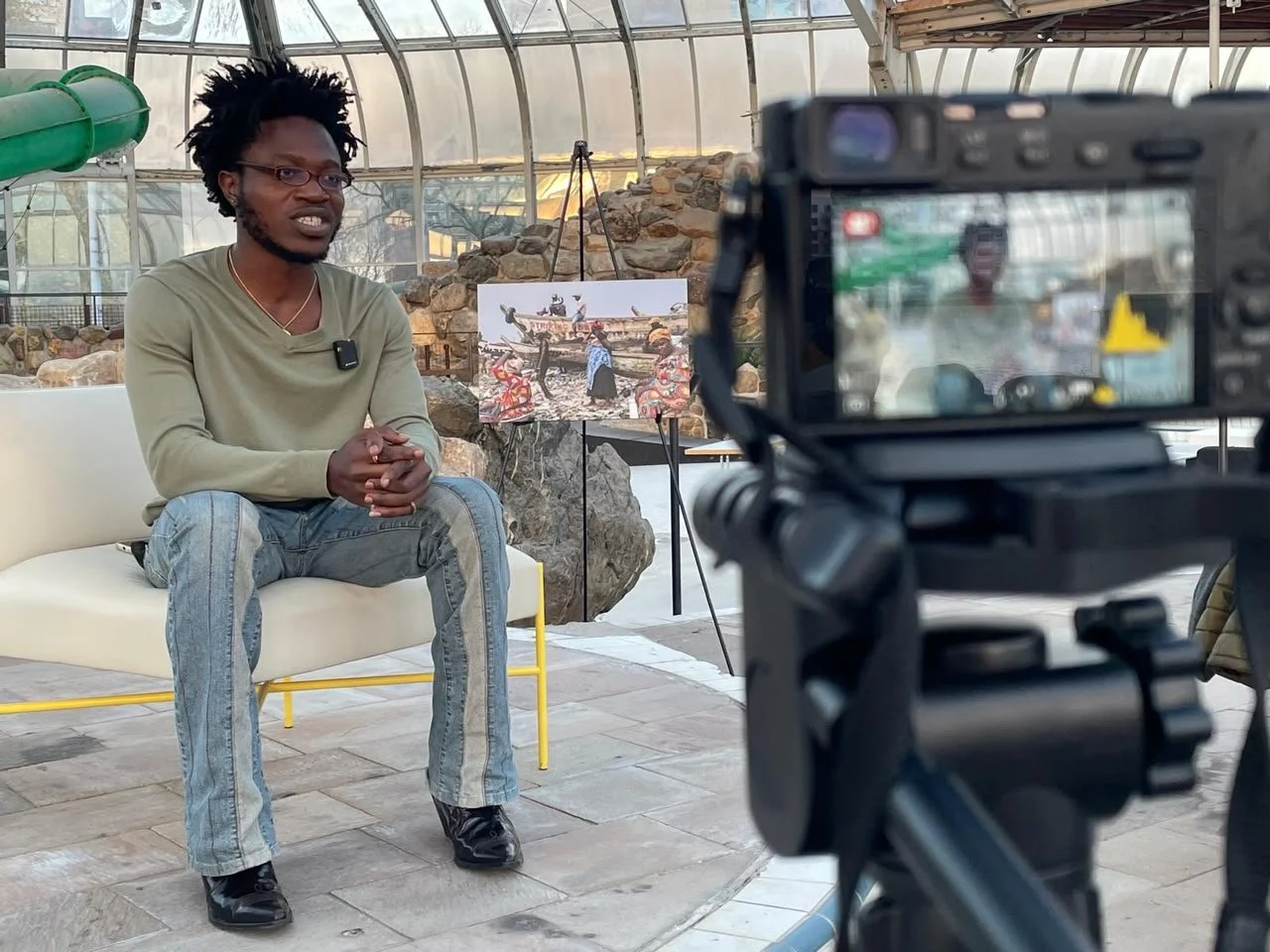
Lawal speaks with One Planet Port during filming at BlueCity in Rotterdam. Photo: One Planet Port
Filming brought Lawal’s message to Rotterdam’s Lijnbaan shopping district. On Saturday, 28 November, One Planet Port presents The Mourning Tide at BlueCity’s Changez anti–Black Friday event, in the same venue where AWP, OPP, and Lawal met on November 6. See the Changez program.
That’s what working from The Hague makes possible for Art Works Projects in our 20th year. We build with regional partners after special moments, like The Hague Climate Week, and create space for artists to bring their work into broader public view.
So what? Now what?
AWP operates by the action model, “So what? Now what?” The next step — demand more from those who control what gets made and where it goes. Fashion brands can cut overproduction. Policymakers can make producers share the cost of what they put into circulation. And we, who already recover, repair, and reuse these clothes, should have a voice in how those decisions get made.
See The Mourning Tide at BlueCity in Rotterdam on Saturday, November 28, from 10:00 to 16:00 CET. Event details.