
ART WORKS PROJECTS Presents
City in Limbo
A Visual Essay by Brittany Greeson
Josette Malone, 41, and Derrick Webster, 44, stand outside waiting for a ride from a friend after picking up cases of bottled water from the Berston Field-House in Flint on April 22, 2018. Following the closure of the state run water distribution sites, community centers and churches stepped in to help the few residents that were able to find transit to a very limited amount of water donations.
ART WORKS Projects’ mission is to use design and the arts to raise awareness of and educate the public about significant human rights issues.
Introduction
Standing out front of the City of Flint Water Plant, Gail Morton came to a pause. The 64-year-old Flint resident had tears trickling down her cheek, halted by chilling winds.
Her gaze shifted to a dense crowd growing near the plant’s front gates. Descending from a church over a mile away were thousands of Flint residents and allies. The chants and signage differed, but all were present in protest of the city’s ongoing water crisis. A state of emergency had been declared just over a month before, thrusting the mid-size town into the national spotlight.
The scene pulled Ms. Morton into a state of dejavu. Her generation had already been here. Her parents’ generation had built the foundation for this. “As a small child growing up, you could almost see what our parents went through. We didn’t have the rights. We didn’t even have the rights to live in certain neighborhoods,” Morton said. “I am so proud today, I mean, I am really proud.”
Like many industrious towns dotting the rust belt region, Flint, Michigan, was thought to be the embodiment of the American Dream throughout the first half of the 20th century. Here, without a higher education, workers could make middle-class wages on the factory floor of General Motors. They could give their children a stable life, buy a small home, start dreaming of the “good life.” The promise of such dreams also attracted a large share of the African-American workforce migrating north from the Southeast to seek the possibility of upward mobility.
Still, while working shoulder to shoulder with their white counterparts, they were not without subjection to the racist policies dominating every other aspect of life. Midway through the 20th century, as deindustrialization took hold, those with greater generational wealth, often white, fled to the suburbs or other metros. The decline of industry, as Flint’s tax base eroded and policy makers shifted funding to these predominantly white suburbs, would spark the decline of public goods in the city and ultimately the decline of public life. Today, Flint is synonymous with its water crisis. It’s population has shrank from 200,000 at its peak to under 95,000. While the city’s pipeline replacement project is finally nearing completion, most residents will never drink from their taps again. Still, those who live in Flint, or have spent a great deal of time there, will speak of it with an impassioned affection. Because of the tenacity, generosity, and grassroots efforts of its people, Flint has the potential to embody a new American dream. A dream not dependent on industry or government but a connection to one another and sense of community.
Flint is not a city easily defined by its tragedy, neither is it innocent or untroubled. Perhaps what makes Flint is an ebb and flow of both.
For now, Flint is a city in constant waiting, a city in limbo. This visual essay, begun in 2015, chronicles that balance and the often simple acts that make up daily life for residents amid the city’s water crisis. The most recent intiration examines life in the city as shaped by the global COVID-19 pandemic and the overlap of two ongoing crises.
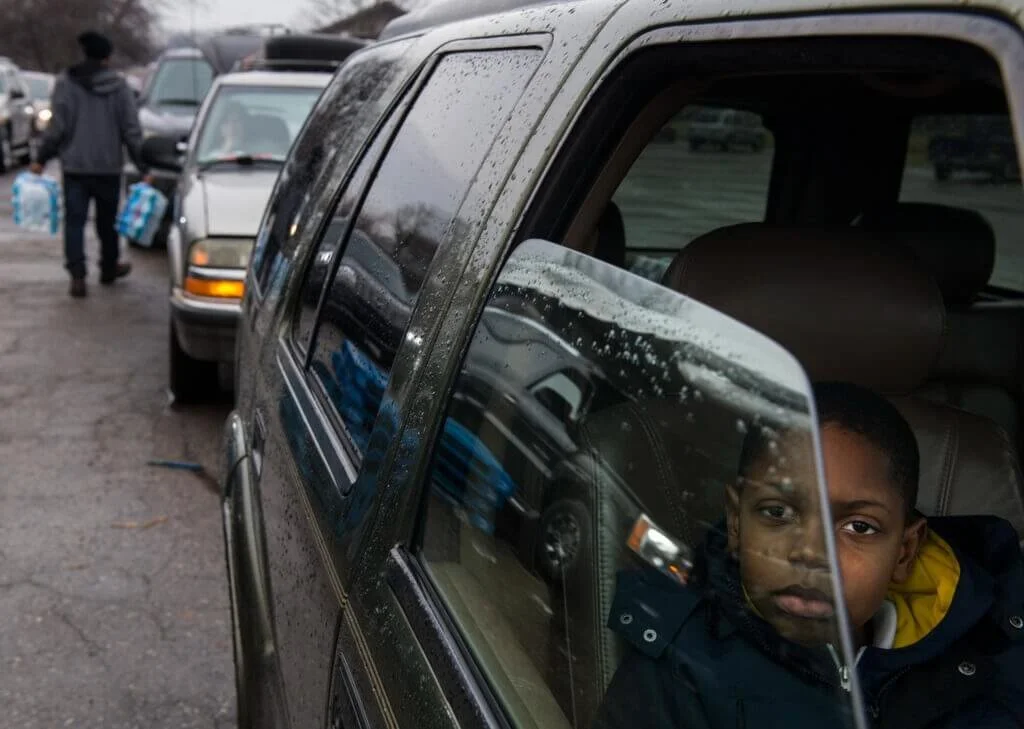
Kaden Parks, 8, peers out the window of his family’s car while picking up bottled water from a Michigan Department of Health and Human Services mobile food pantry site at the Greater Holy Temple Church Of God in Flint on December 20, 2018. Parks and his family are among many Flint residents who are forced to wait hours in free distribution lines as the price of bottled water remains a significant barrier. Due to finite supplies, families were limited to just several cases per visit, often a fraction of their weekly use. Today, the MDHHS mobile food pantry is still in operation but COVID-19 has posed significant barriers to those who may be immunocompromised.

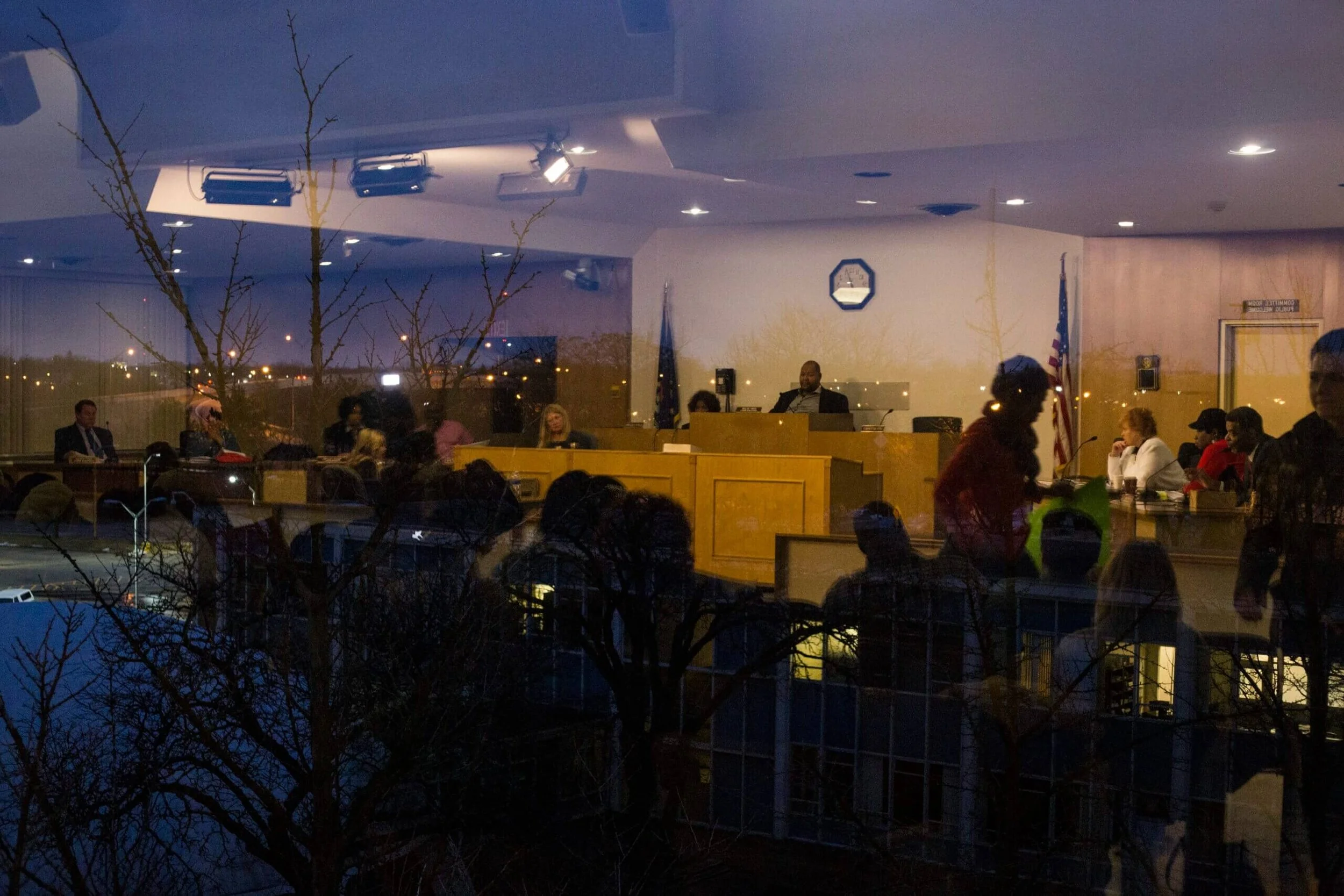
City Council President Kerry Nelson listens to the concerns of a resident as she voices her concerns for local water rates and the lack of current aid as the Flint City Council holds a meeting to discuss whether residents should have to pay their water bills in full at Flint City Hall on February 8, 2016. Despite the ongoing water crisis, Flint water rates remained among the highest in the nation. The meeting lasted four hours as tensions escalated.
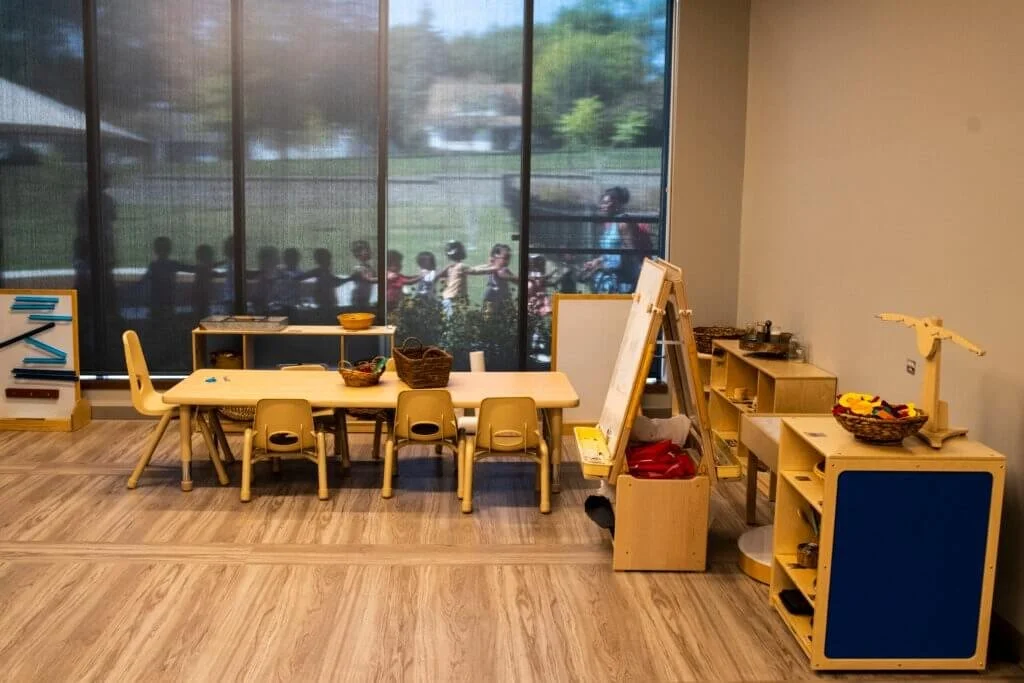
Children form a single-file line while making their way to the playground, seen from inside a classroom often used for behavioral observation at Educare Flint, on September 11, 2019. The school, which gets most of its funding in the private sector, is part of a network of early childhood education centers. Its model includes a small teacher-to-student ratio, early intervention for students suspected to have disabilities, and mindfulness rooms. For the Flint community, Educare has been looked at as a beacon for hope. It currently serves children ages 0-5 who tested in the high range for lead. However, the school is at capacity with just over 200 students.

A full cast of dancers line the stage for curtain call following their performance in the University of Michigan-Flint’s Spring Dance Concert in downtown Flint, on Sunday April 17, 2016. In the final dance, thousands of empty water bottles were dropped from the catwalk onto the stage to pay homage to Flint’s water crisis and the city’s dependence on bottled water.

Torea Gibson, 7, and his sister, Alexus Smith, 6, play with their drawings on the floor of their home in Flint on August 6, 2019. Their mother, Ebony Dixon, worries both children are on the Autism spectrum and has had significant challenges getting appropriate diagnoses and special education services for them through the public education system.

As a small child growing up, you could almost see what our parents went through. We didn’t have the rights. We didn’t even have the rights to live in certain neighborhoods. —
Gail Morton
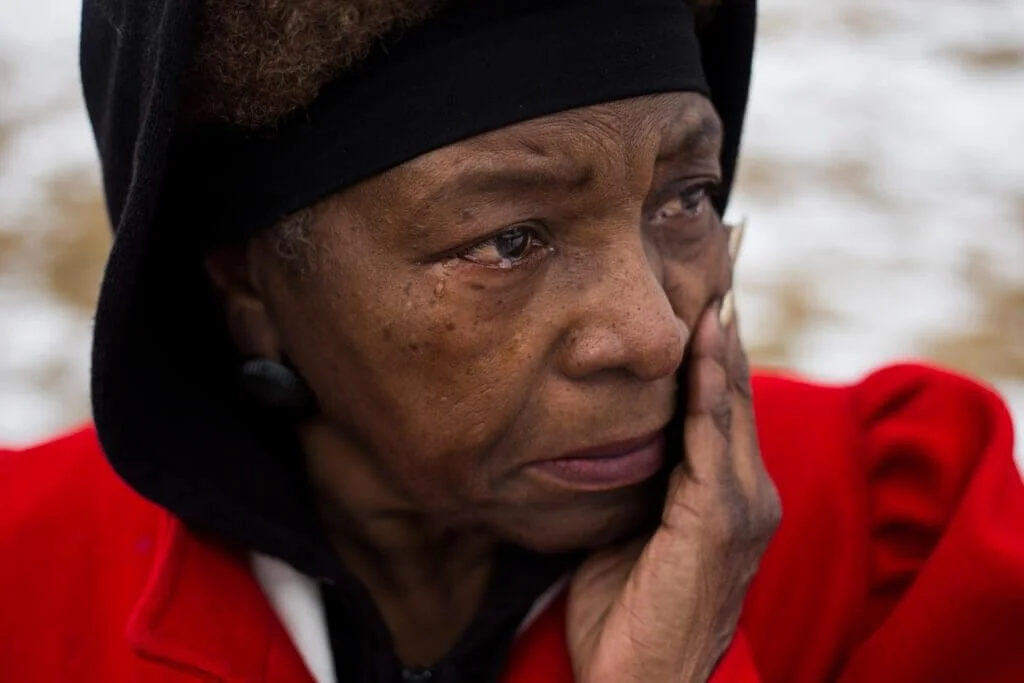
Gail Morton, 64, sobs as she watches protestors gather following a scheduled march with the Rev. Jesse Jackson that made its way from the Metropolitan Baptist Tabernacle Church over a mile to the front of the City of Flint Water Plant on February 19, 2016. “As a small child growing up, you could almost see what our parents went through. We didn’t have the rights. We didn’t even have the rights to live in certain neighborhoods,” Morton said. “I am so proud today, I mean, I am really proud.”
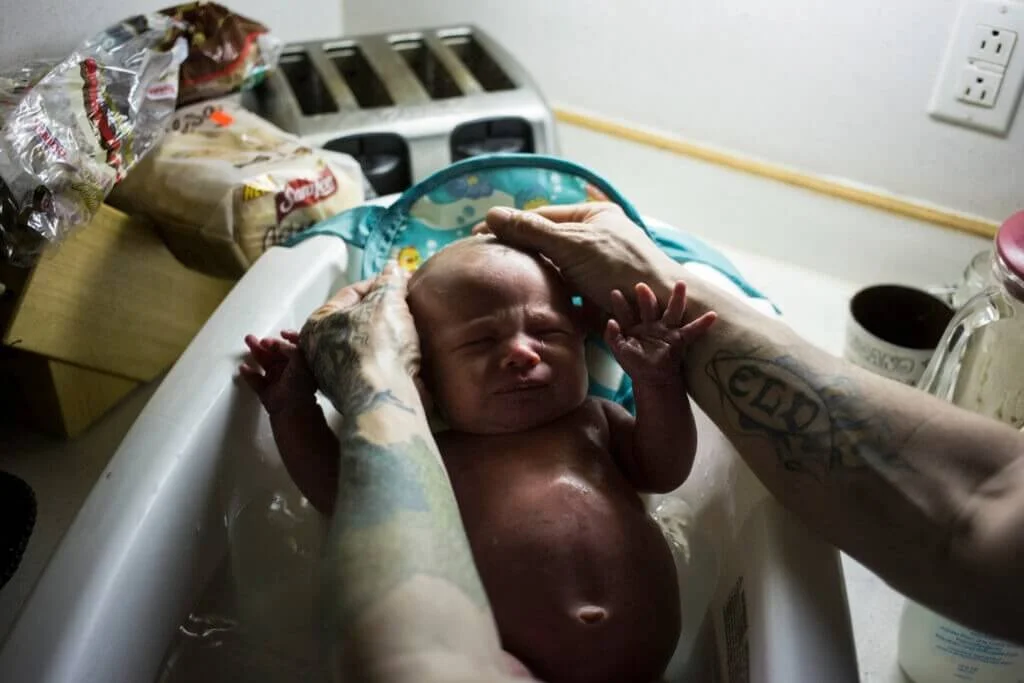
Adam Murphy, 36, gives his newborn son, Declan Murphy, his second bath since birth using bottled water at his family’s home in Flint on April 9, 2016. The family had been using bottled water to bathe for over several months due to safety concerns for the tap water’s content. Although it hadn’t been verified by the CDC, a large portion of residents complained of rashes and hair loss. Declan, now almost four, has never had a drink of the city’s tap water. However, his mother Christina Murphy worries about the amount of lead she was exposed to while he was in the womb at start of the water crisis.
I want to stay in Flint, because I was born and raised in Flint, but if I have to move to better my family, I will. —
Brittny Giles
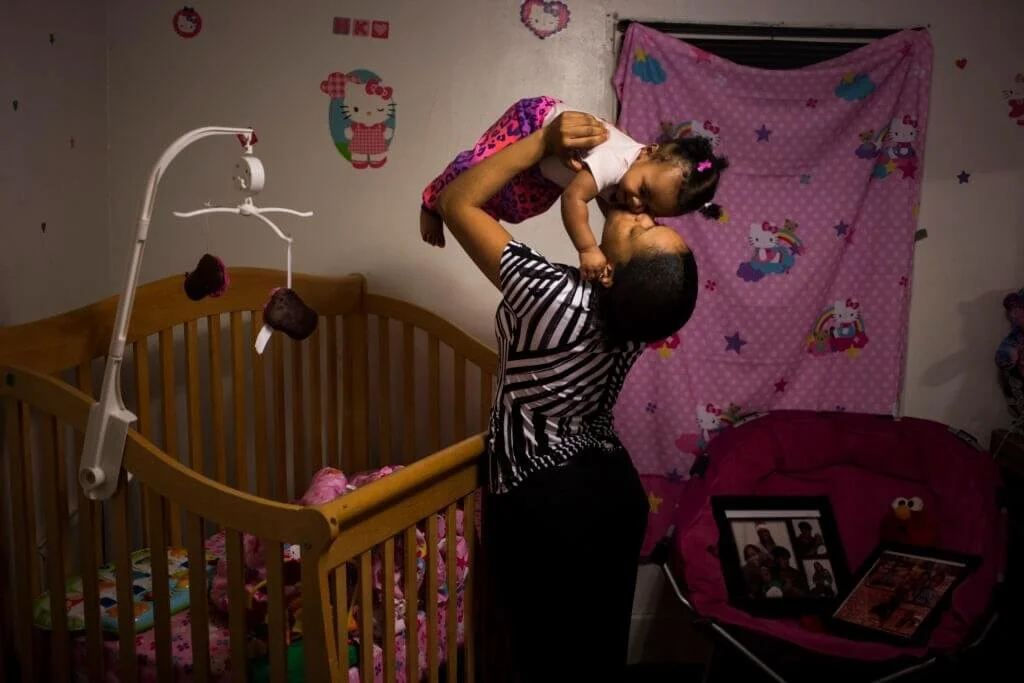
Brittny Giles gives her 9-month-old daughter, Joel, a kiss before putting her to to bed at their home in Flint on February 4, 2016. Following the water crisis, Giles began questioning whether or not she wanted to continue living in the city. “I want to stay in Flint, because I was born and raised in Flint, but if I have to move to better my family, I will,” Giles said. “It’s just really sad. Flint used to be General Motors. It was fun, but now it’s just abandoned houses and water bottles.”
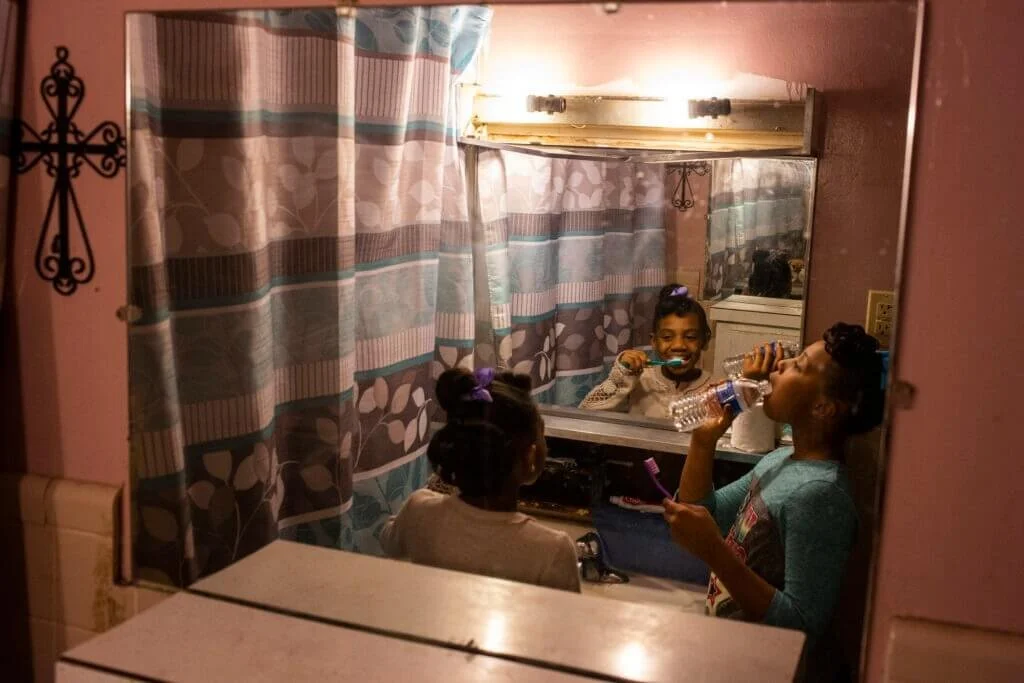
Aireal Sweet, 10, left, and Amaria Dirrell, 8, right, brush their teeth using bottled water in the bathroom of their family’s home in Flint on January 17, 2016. The girls and their siblings were blood tested for lead and all came back with elevated levels. However, like other children in Flint, due to the half-life of lead in the blood stream, their precise level of exposure is unknown at the time of testing. Lead testing services were not offered to Flint residents on a large scale until over a year and a half after the city switched its water source.
According to the CDC, “Lead is cleared from the blood and soft tissues with a half-life of 1 to 2 months and more slowly from the skeleton, with a half-life of years to decades.”
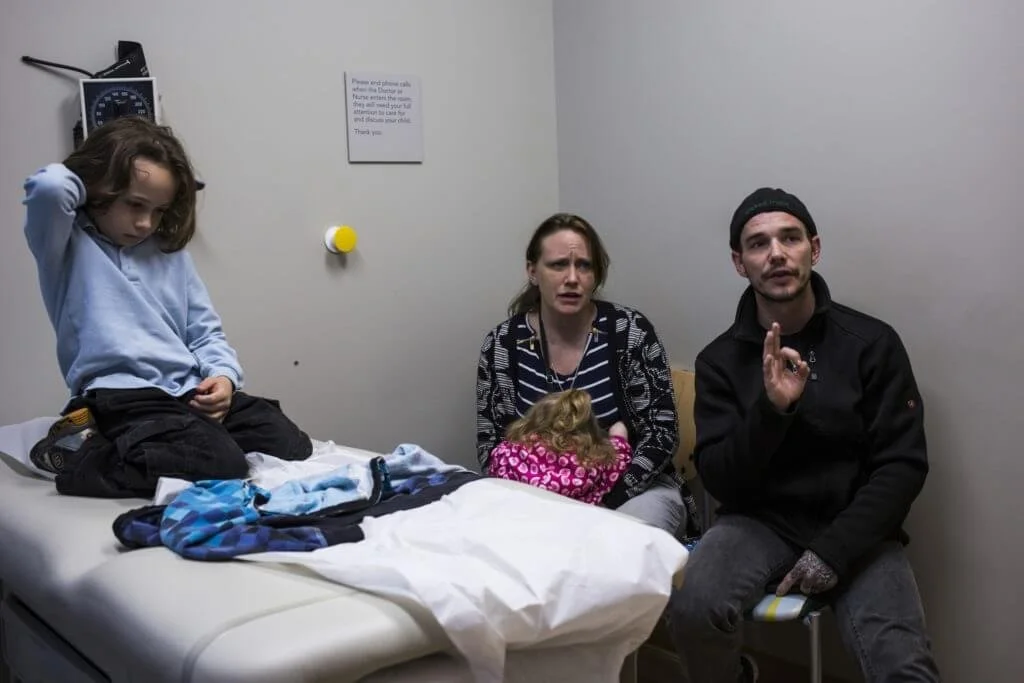
Christina and Adam Murphy, become angered with their son, Cillian’s, pediatrician, after discussing testing alternatives to see how much lead he may have been exposed to at the time the city was using the Flint River as a water source during an appointment at Hurley Children’s Hospital in Flint on May 7, 2016. According to the pediatrician, Hurley had planned to treat all children as though they had been lead poisoned as a wholistic approach to benefit the community at large. The Murphy’s, however, were disappointed at the lack of direct answers from those in the medical field and felt they were not doing enough for their son and the likelihood he could develop a learning disorder.
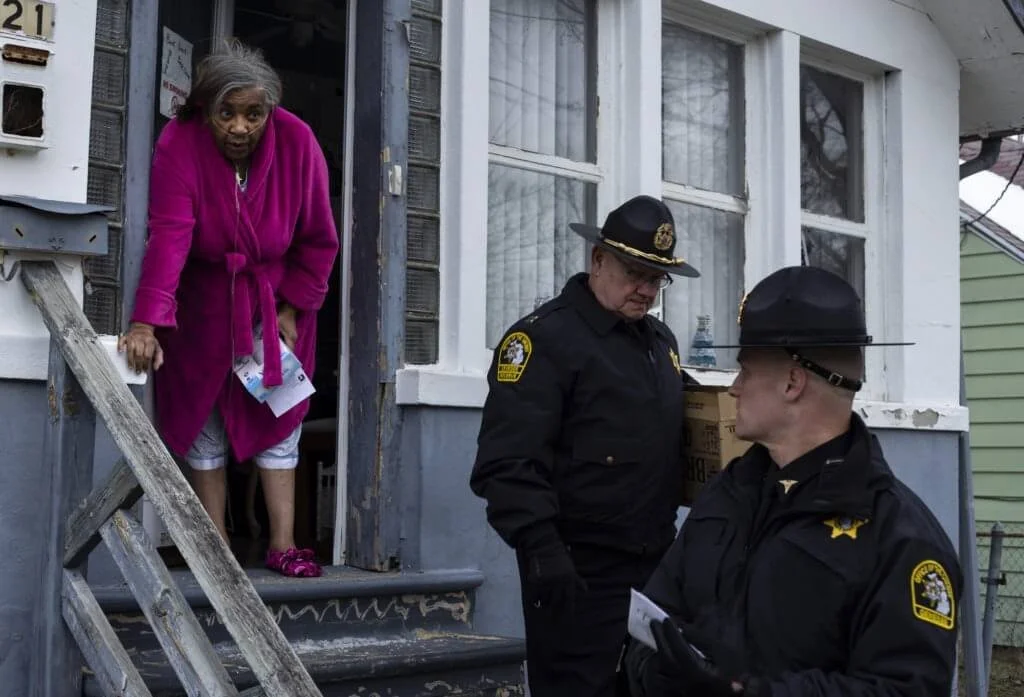
Bertha White, 64, of Flint, Mich., opens her front door to local police officers to accept a new filter and gallon jugs of water during a distribution to residents by the Genesee County sheriff’s office on January 7, 2016. Distributions continued through the day on the city’s north side, which is lower income, with 1,000 water filters on the service truck. A primary worry for local officials had been that the limited mobility for the elderly forced them to drink the lead tainted tap water for longer than the rest of the population. The door to door program was eventually replaced by a hotline that elderly citizens could call for water deliveries.

Hundreds of index cards, possessing the addresses of local water lines and whether or not they are made of lead, are stacked in one of the filing cabinets at the City of Flint Division of Water Service Center on February 11, 2016. There are roughly 50,000 cards in total, organized by street name, however, not all have complete information regarding the lead lines as they date back to the 1920’s. In the Fall of 2015, when the presence of lead was first publicly announced to be in the tap water of residents, only a fourth of the cards were computerized leaving many community members in the dark about their own plumbing system.
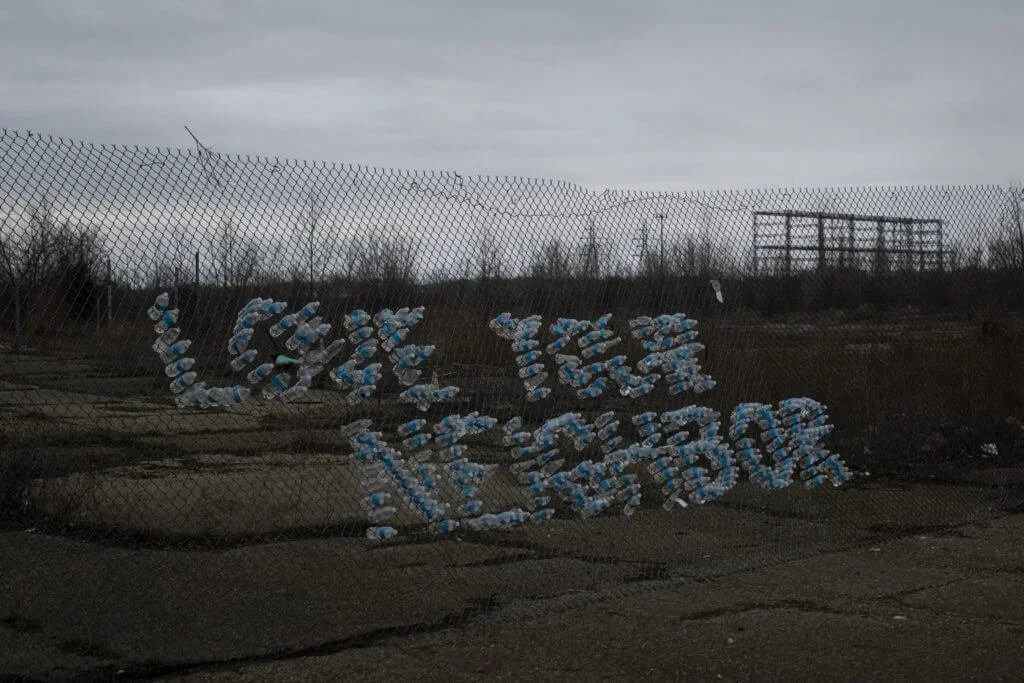
Empty plastic bottles hang in a fence nearby the City of Flint Water Plant in Flint on April 18, 2018.
Despite a city-wide effort to replace lead and galvanized steel water lines, the majority of Flint residents are still reliant on bottled water for drinking and cooking.

Sincere Smith, 5, gazes out of the window of his mother’s car at the Flint River after noticing the water level had risen significantly following heavy rains on April 18, 2018. His mother, Ariana Hawk, previously remarked that the Flint river water still makes him nervous and he knows it as the water that gave him rashes.
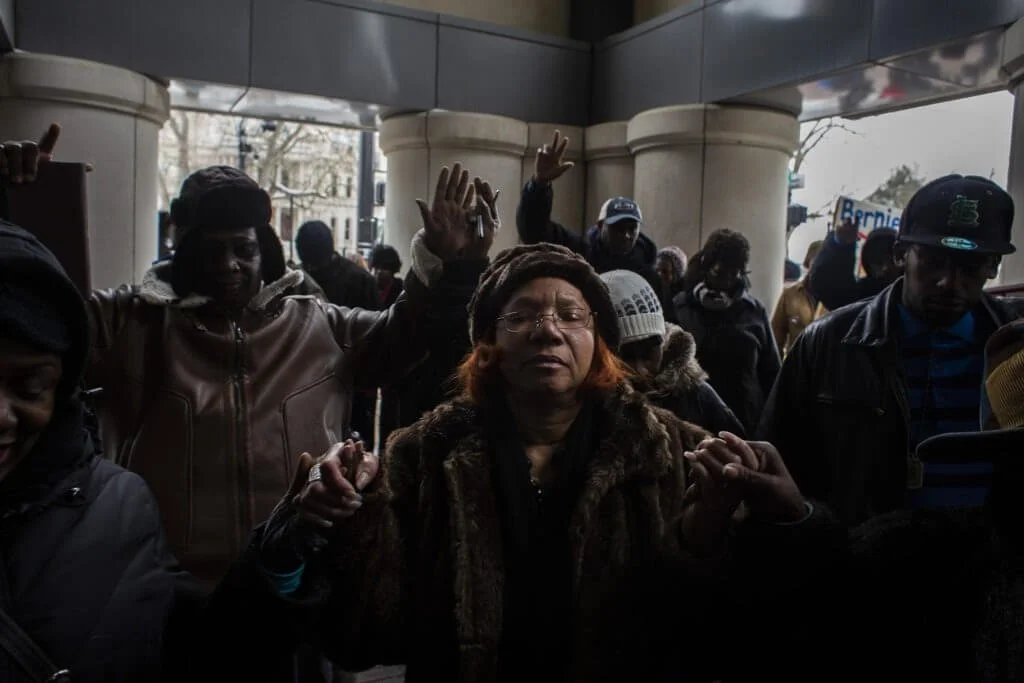
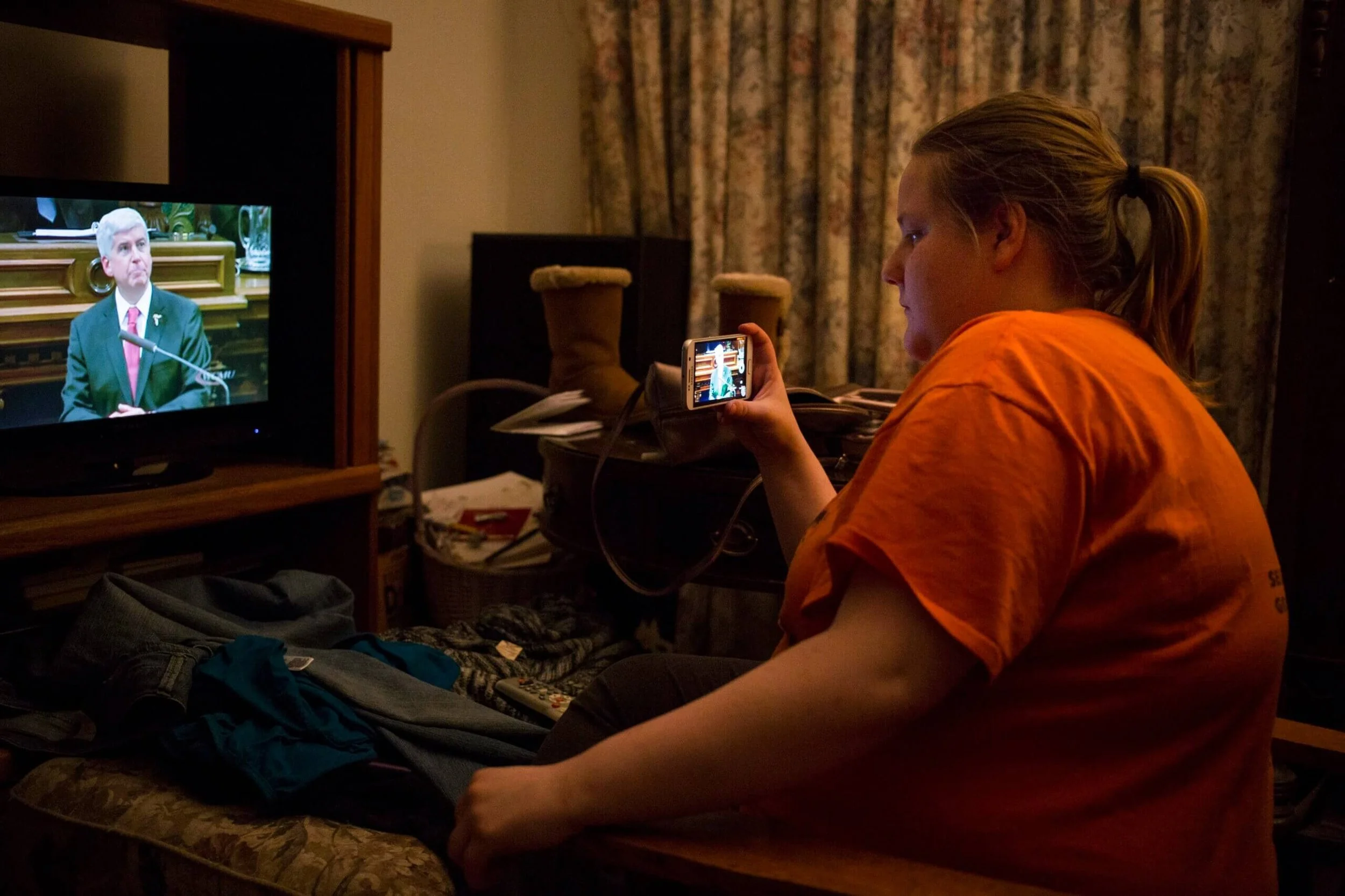
Earlene Love, 64, prays alongside her peers as protestors gather outside the Romney building, which houses the office of Governor Rick Snyder, in Lansing, Mich., on January 14, 2016. Earlier protestors had filled the front entrance of the building, conflicting with officers who said they would not be permitted inside. Throughout the city’s water crisis, many residents have viewed Snyder as a distant leader whose priorities were never on Flint’s well being.
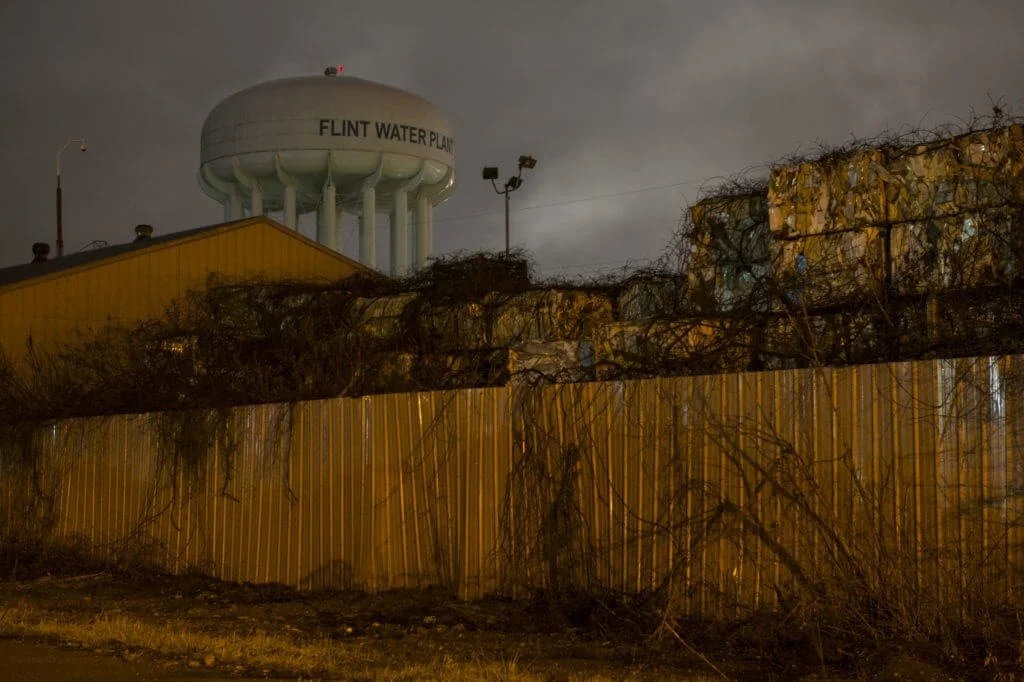
The City of Flint Water Plant, not a synonymous symbol for the city’s water crisis, is seen from behind a metal scrap yard on December 12, 2018.
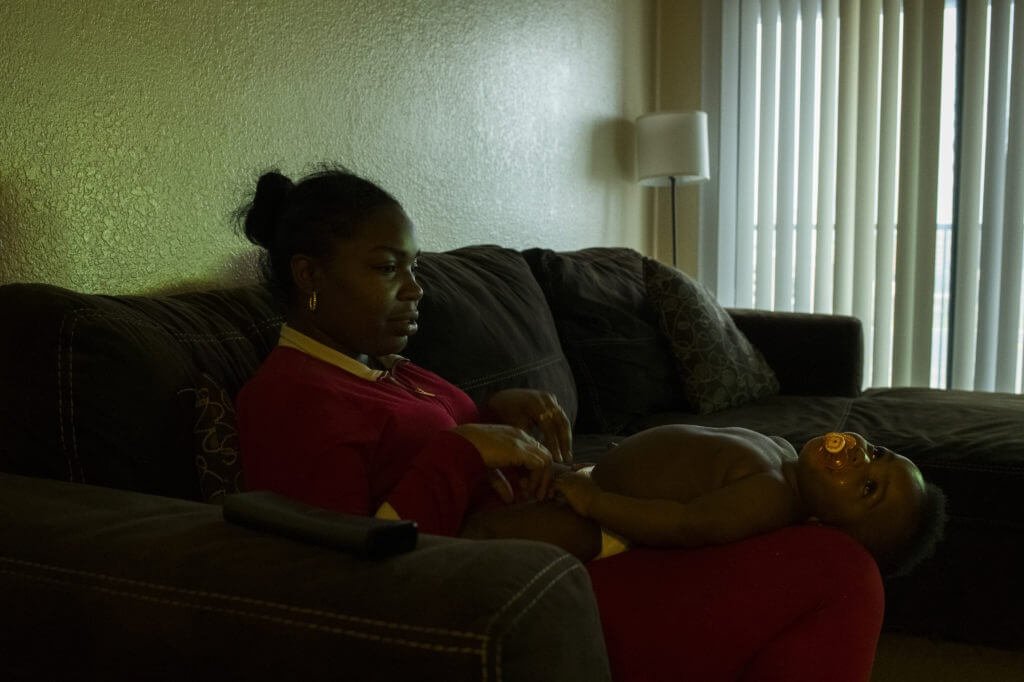
Flint activist Ariana Hawk starts to put her youngest son to sleep as the rest of her children eat dinner at their home in Flint, Michigan on April 23, 2018.

Leon Abdullah El-Alamin, 39, closes his eyes in his car to listen to music, something he says he likes to do regularly, especially amid the ongoing COVID-19 pandemic outside of his home in Flint, Mich., on May 1, 2020.
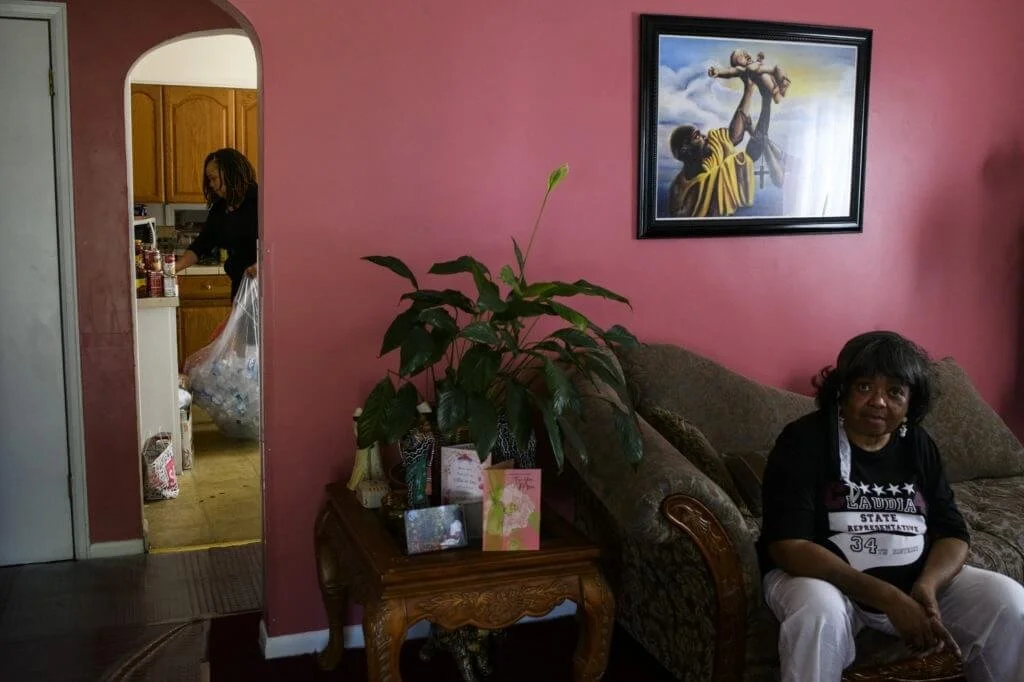
Local activist Claudia Perkins-Milton, 67, and her daughter, Denisha Davis, 46, are seen through an open door as Denisha recycles empty water bottles at Claudia’s home in Flint, Mich., on June 16, 2020. Claudia was hospitalized with Covid-19 for ten days in May and her daughter, a school teacher, visited from Texas to help care for her.
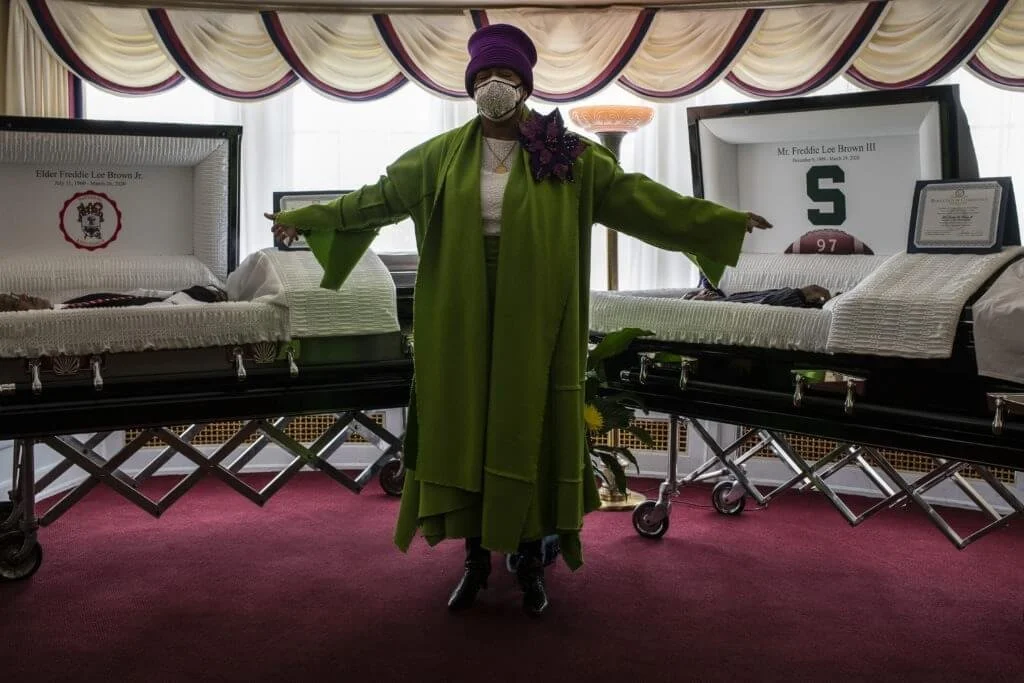
Sandy Brown, 60, of Flint, poses for a photo with her husband, Freddie Brown Jr., 59, left, and her son, Freddie Brown III, 20, right, both victims of COVID-19, at Dodds-Dumanois Funeral Home in Flint, Mich., on April 10, 2020. Attendees were asked to stay in their cars and were only permitted for entry a few at a time amidst fears of spreading COVID-19.
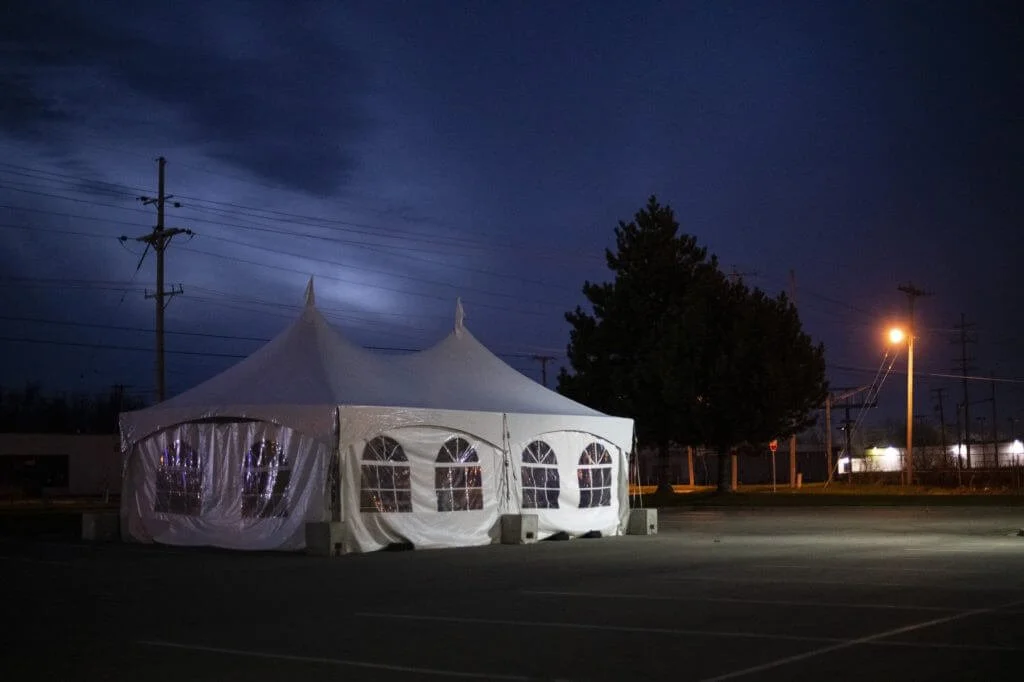
A COVID-19 testing site is seen at the Hamilton Community Health Network in Flint, Mich., on May 1, 2020.
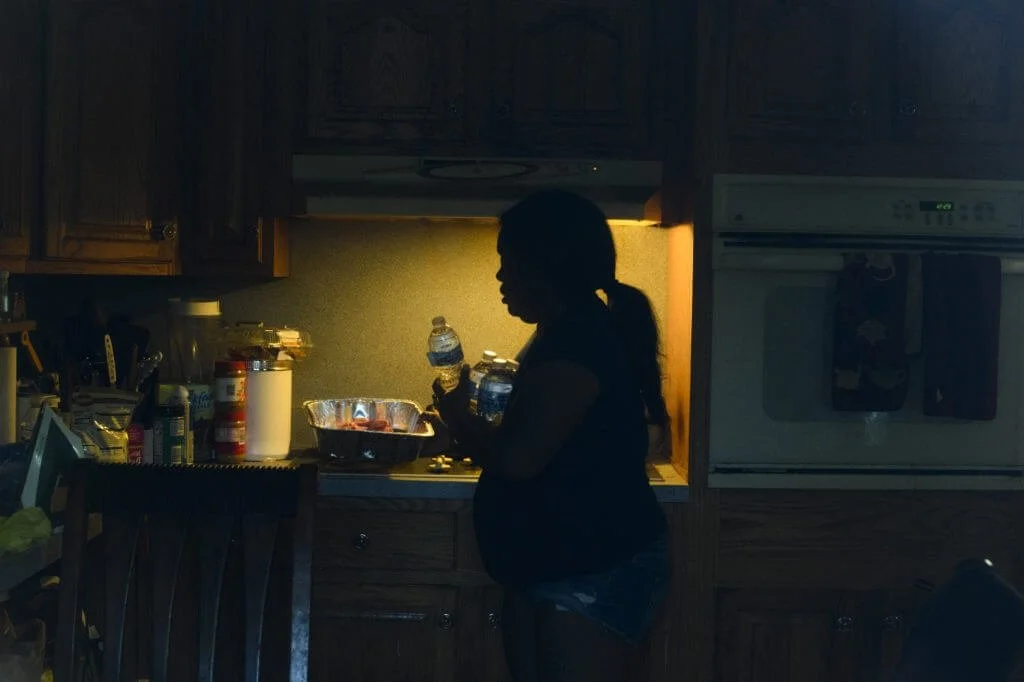
Jeree Brown, 32, prepares dinner for her children at their home in Flint, Mich., on June 18, 2020. Brown, a mother of three and nursing student, lost multiple friends and family members to COVID-19 this Spring. Having experienced multiple personal tragedies over the course of her life, she felt the pandemic was yet another tribulation. Still, she has plans to become a nurse and graduated this Summer.
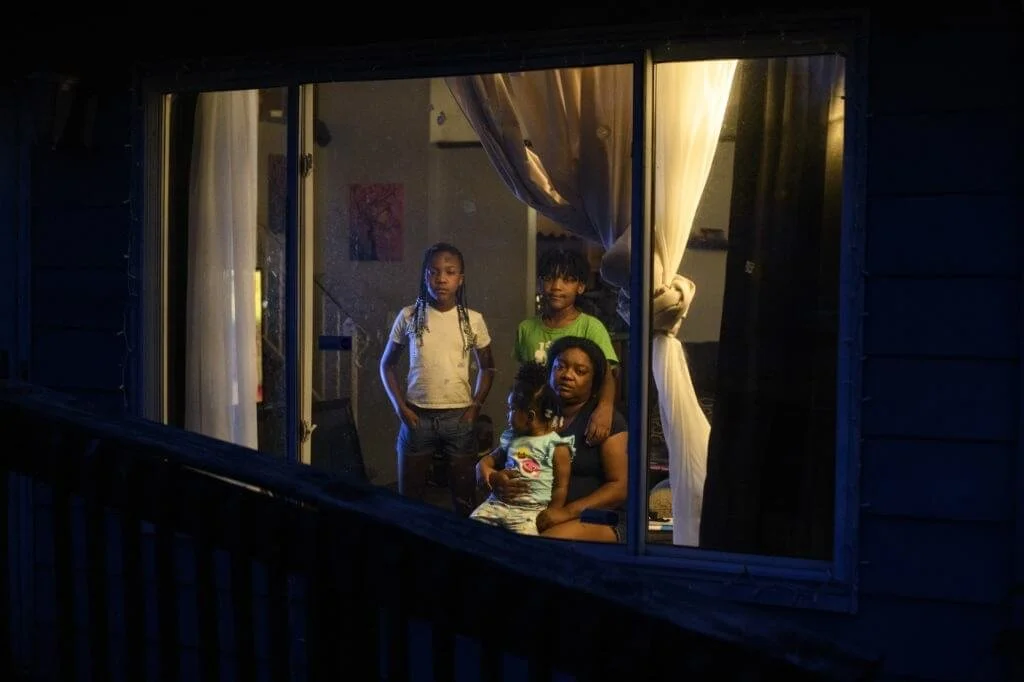
Jeree Brown, 32, with her children Ja’Nyah, 9, left, Jabari Jr., 8, right, and Jhy’Lah, 1, center, in Flint, Mich., on June 18, 2020. Brown’s children have been homeschooled during the Spring semester and Jabari, who is autistic, has been receiving special education services remotely. Brown’s husband was recently laid off from work and their unemployment checks delayed putting a significant finical strain on the family.

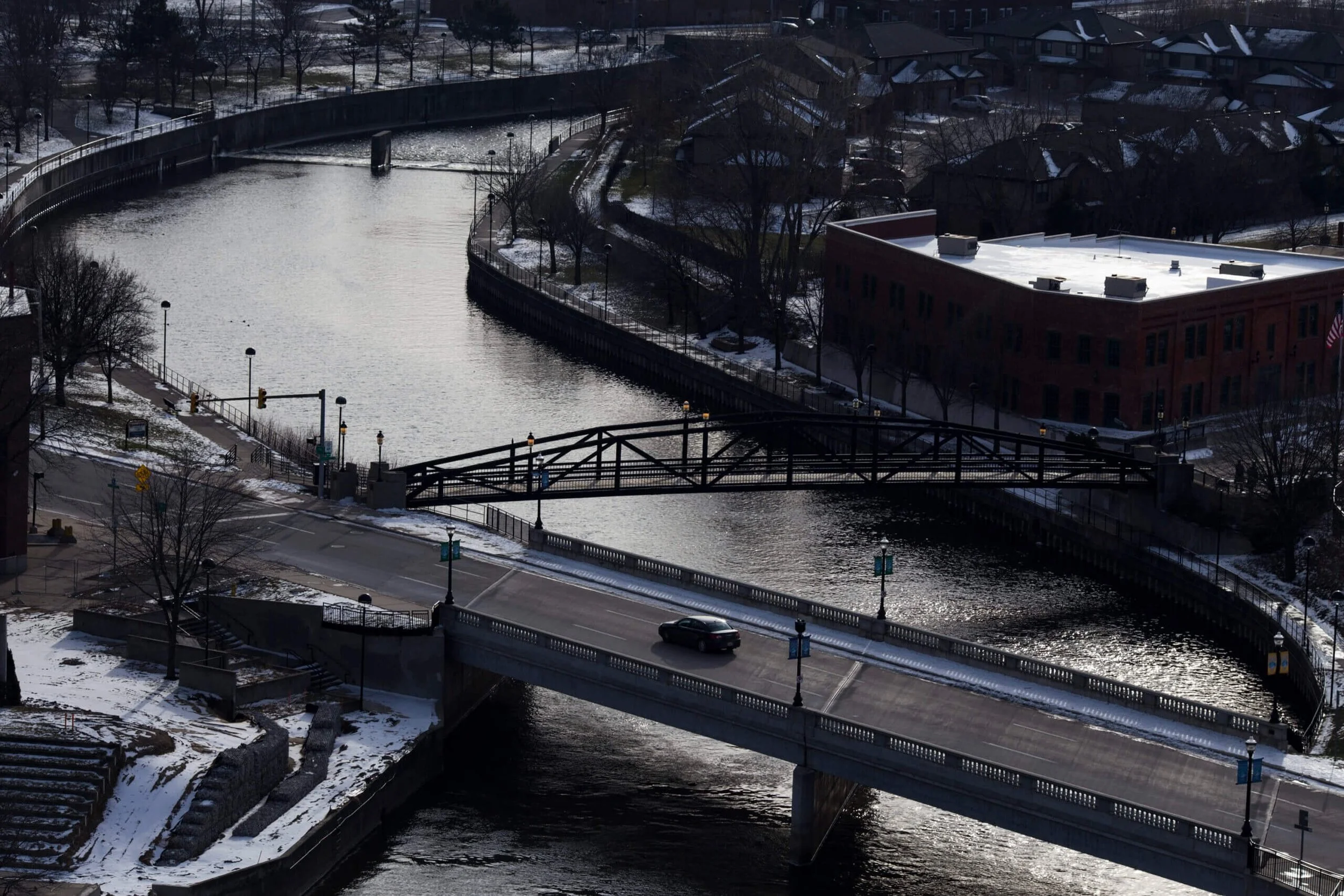
Water flows over a man-made water fall in the Flint River in downtown Flint on December 21, 2018. In April of 2014, the City of Flint switched its water source from Lake Huron to the river citing a potential savings of around $5 million over the course of two years. In 2015, Dr. Marc Edwards of Virginia Tech University told the Detroit Free Press that his research showed “the Flint River water, without additional controls, corrodes lead inside pipes at 19 times the rate of water piped from Detroit.” Months following that interview, Dr. Mona-Hanna Attisha would release her findings that children’s blood lead levels had doubled in the Flint community.
CITY IN LIMBO
Flint
TImeline: Part I
-
Nov 29 2011
Governor Rick Snyder appoints an emergency manager for the City of Flint, under significant financial stress, through Public Act 436. Critics argue the act strips away the power of local officials as chosen by voters.
-
MAR 2012
In hopes of a significant savings, Genesee County creates a plan for a pipeline from Lake Huron to Flint with hopes of joining the Karegnondi Water Authority (KWA) upon its estimated completion in 2016.
-
APR 25 2014
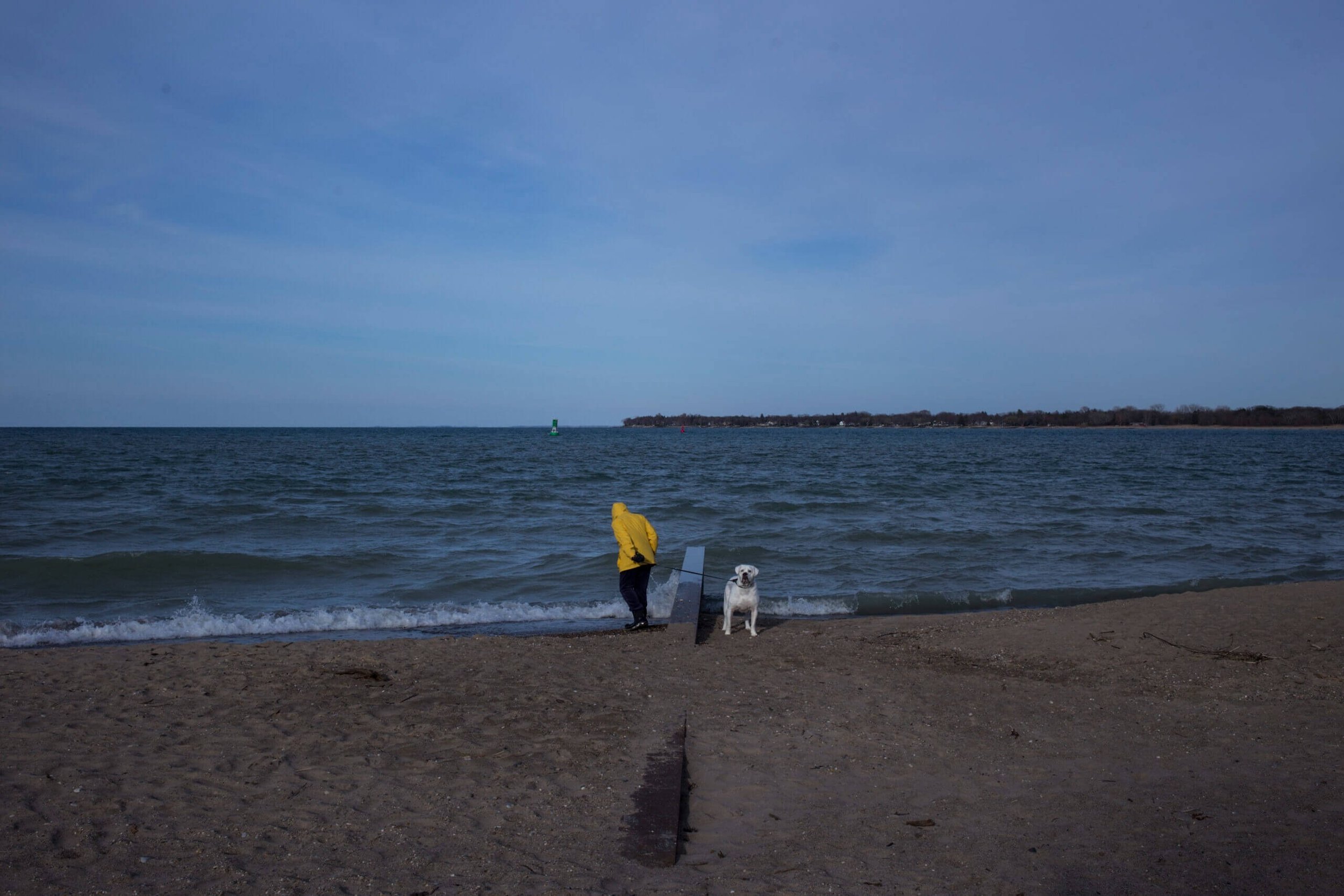
Under emergency management, the City of Flint begins relying on the local water plant, which hadn’t been used in nearly 50 years for daily water treatment, and formally switches to the Flint River as its water source. The switch was said to be a temporary solution until the completion of the KWA pipeline. Officials decline to treat the river water with corrosion inhibitors in an attempt to save roughly $100 a day.
-
JUNE 2014
The Michigan Department of Health and Human Services marks this date as the starting point of a Legionalla outbreak in Genesee County.
-
Summer 2014
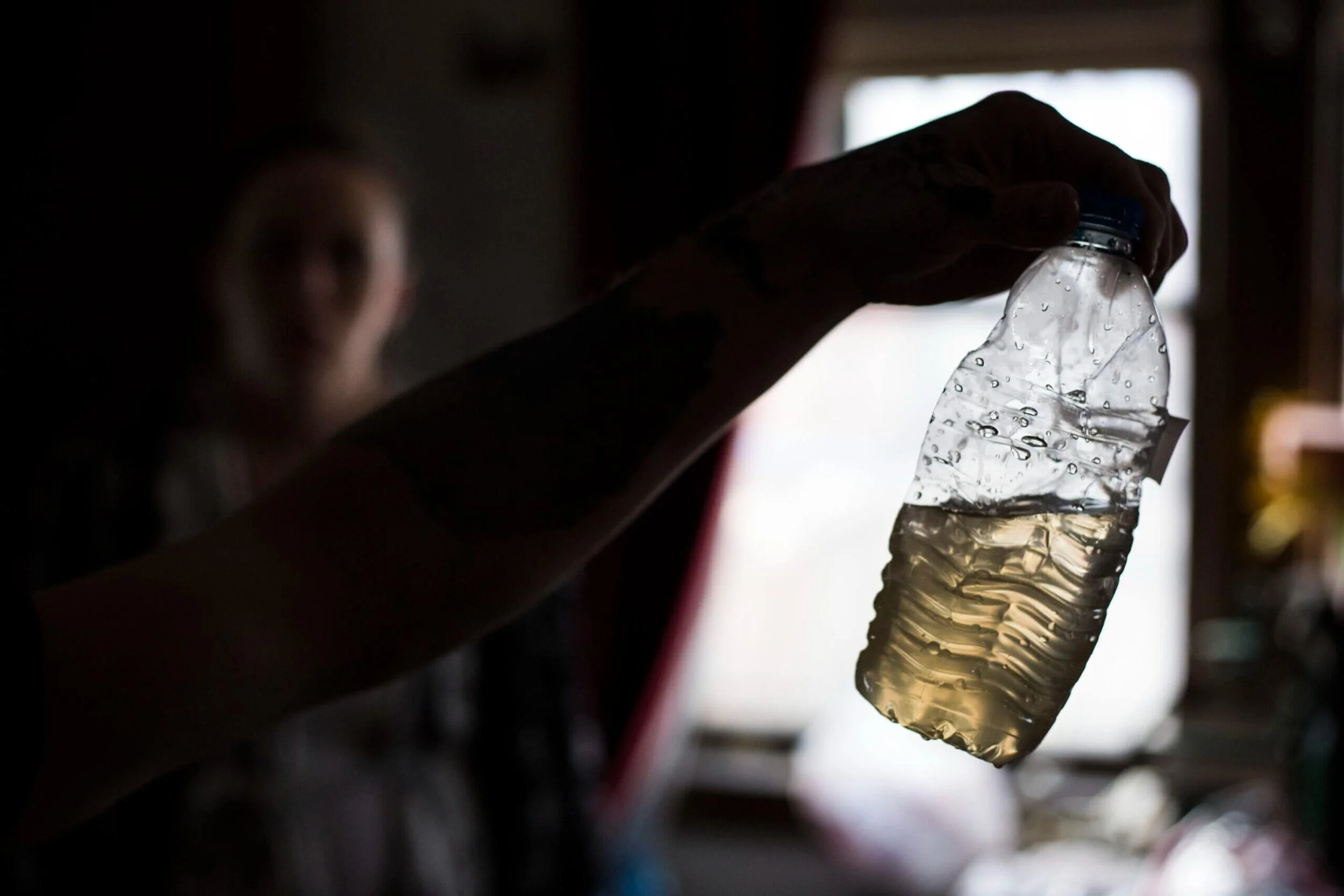
Residents begin complaining about the taste, odor, and color of their tap water. Boil notices for E.Coli are sent out to residents by August.
-
Oct 13 2014
General Motors announces it will stop using the Flint water after noticing corrosion on engine parts. The plant reaches an agreement to buy water from Lake Huron via the neighboring Flint Township.

-
Jan 1 2015
Local officials send out a notification to residents that their water has elevated levels of TTHM, a carcinogenic byproduct, and is in violation of the Safe Drinking Water Act.
-
Mar 23 2015
Flint City Council votes 7-1 to reconnect Flint to the DWSD. However, it has limited power to initiate the change as the city is still under an Emergency Manager, Jerry Ambrose, who claims the Flint water is no less safe than the water from DWSD.
-
Sept 2015
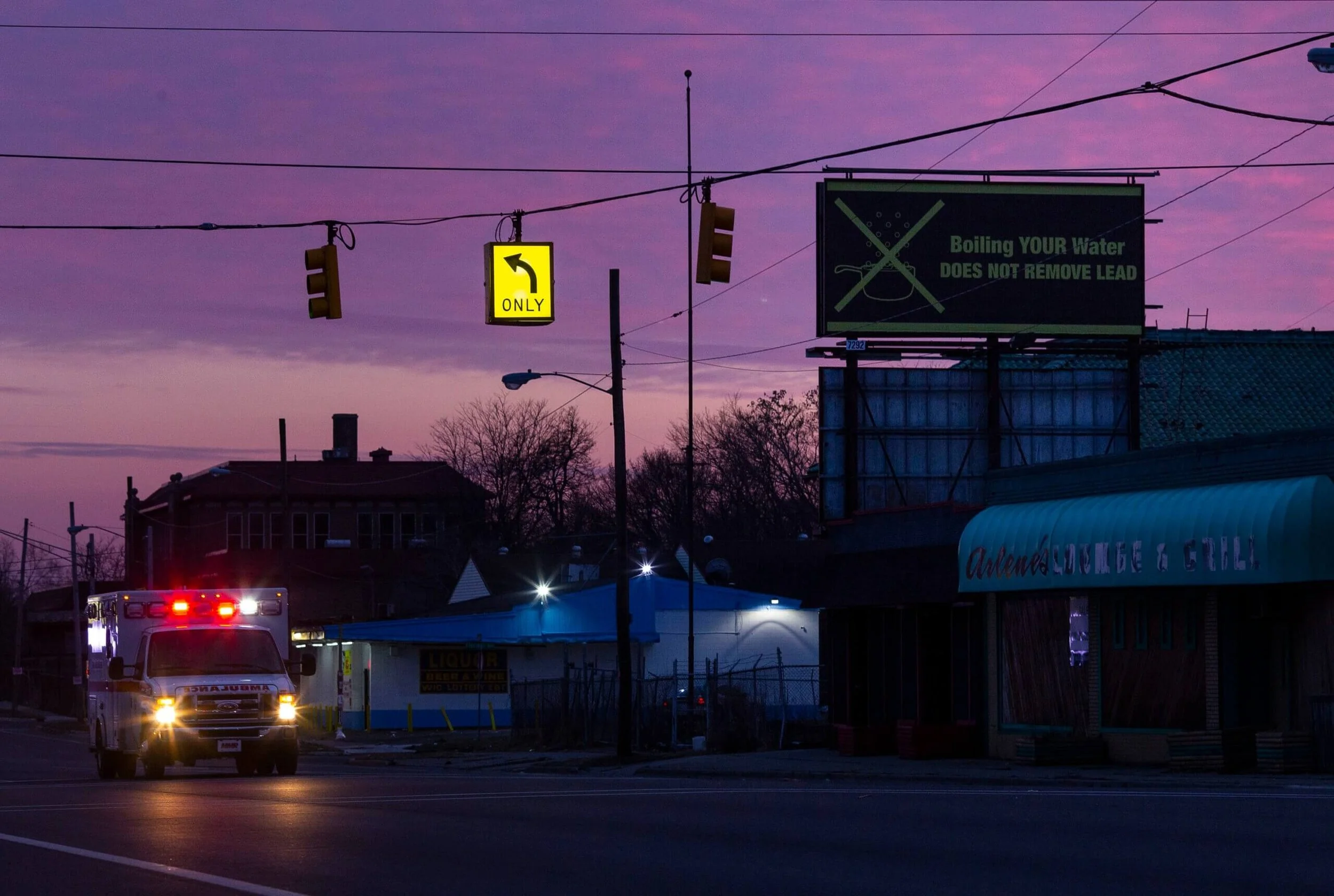
Local citizens and a team of Virginia Tech scientists including Dr. Marc Edwards, an expert in municipal water quality and civil engineering professor, released the results of 252 water samples taken from Flint homes. The study revealed that 40 percent of homes tested had levels of lead over 5 parts per a billion. The study concludes that the Flint river water is far more corrosive than the water from Detroit.
-
Sept 2015
A research team and pediatrician Dr. Mona Hana Attisha of Flint’s Hurley Medical release findings that the number of children with elevated blood lead levels in Flint had doubled, and even tripled in some wards, since the city switched its water. The MDEQ later refutes then verifies the findings and begins its own testing.

-
Sept 25 2015
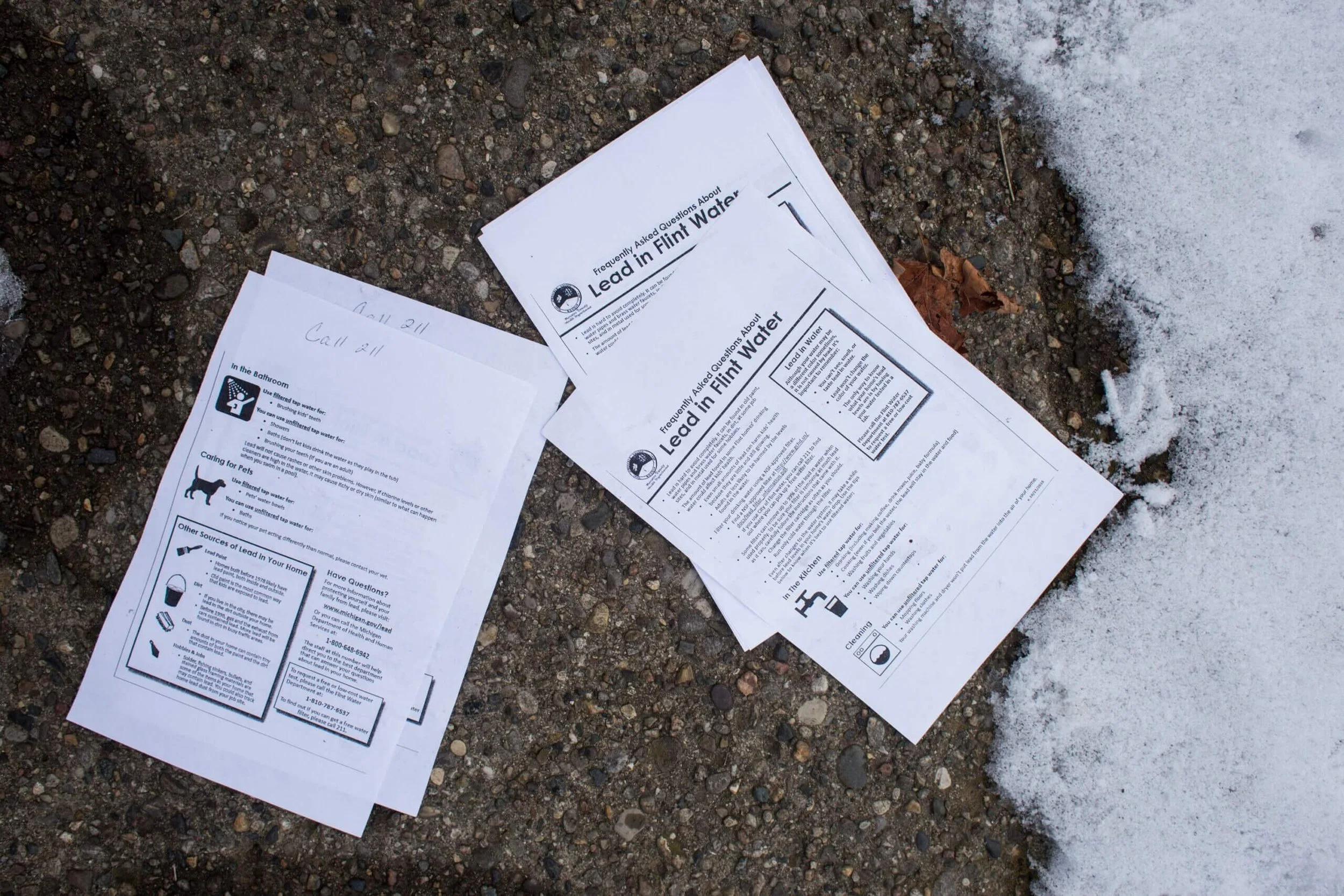
Flint sends out its first lead advisory to residents.
-
Oct 2015
The MDEQ finds three Flint public schools with severely elevated levels of lead in its drinking water. The city finally switches back to the Detroit water system, but residents are advised to continue using filters or bottled water as it’ll take time before anti-corrosion treatments can work effectively.
-
Dec 14 2015
The City of Flint declares a state of emergency.

-
Jan 5 2016
Governor Rick Snyder declares a state of emergency in Flint freeing up state resources. “What we found was contrary to everything that’s been going on in the country and in the City of Flint. The percentage of children with lead poisoning had increased,” Dr. Hanna-Attisha said. “Here we are in 2016, in the middle of the Great Lakes, and we don’t have access to safe drinking water, and we have just given an entire population lead.”
-
Jan 12 2016
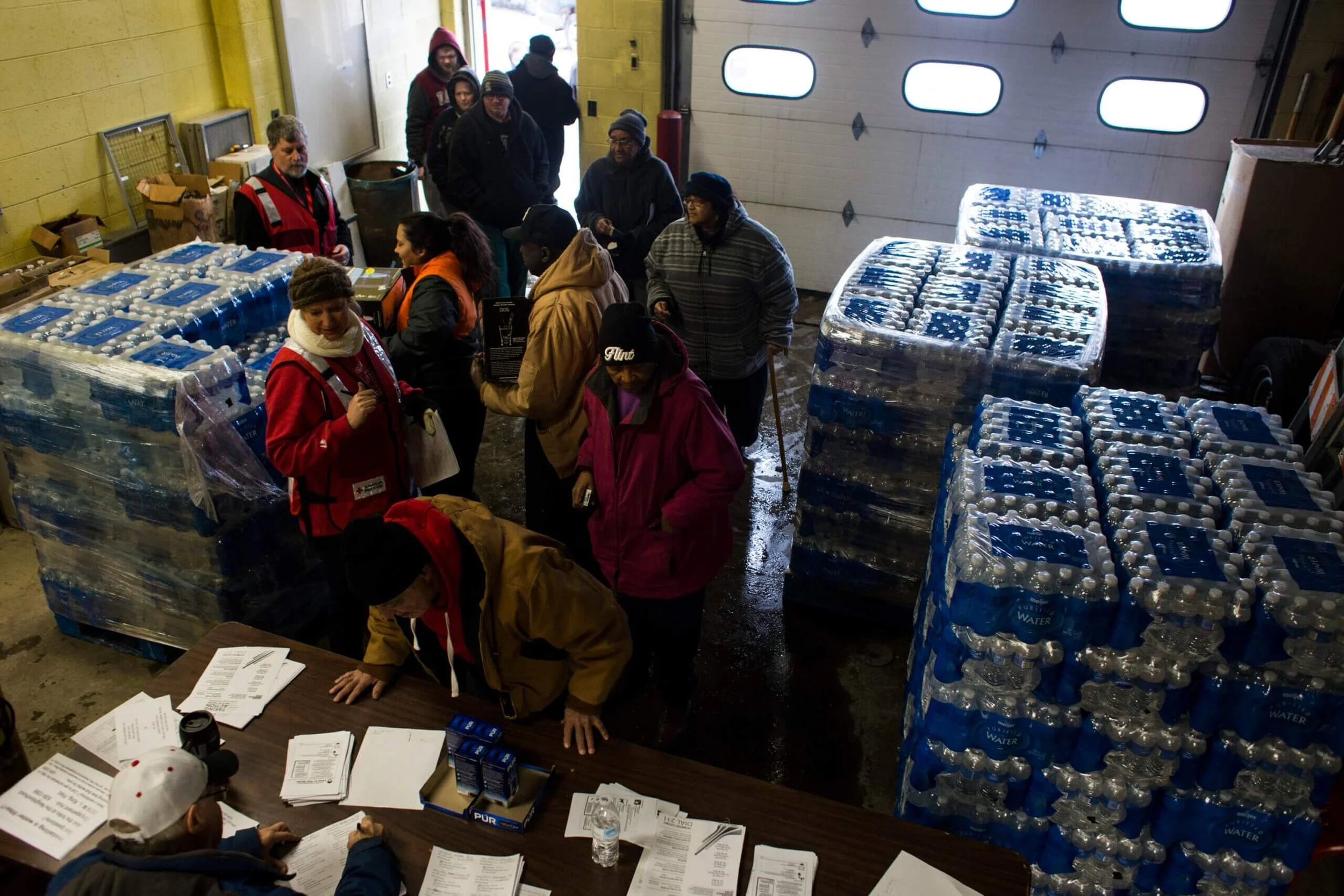
The Michigan National Guard is deployed to Flint to distribute water, using many of the City’s fire stations as hubs.
-
Jan 16 2016
President Obama declares a federal emergency in Flint freeing up federal resources, up to $5 million in aid.
-
Mar 4 2016
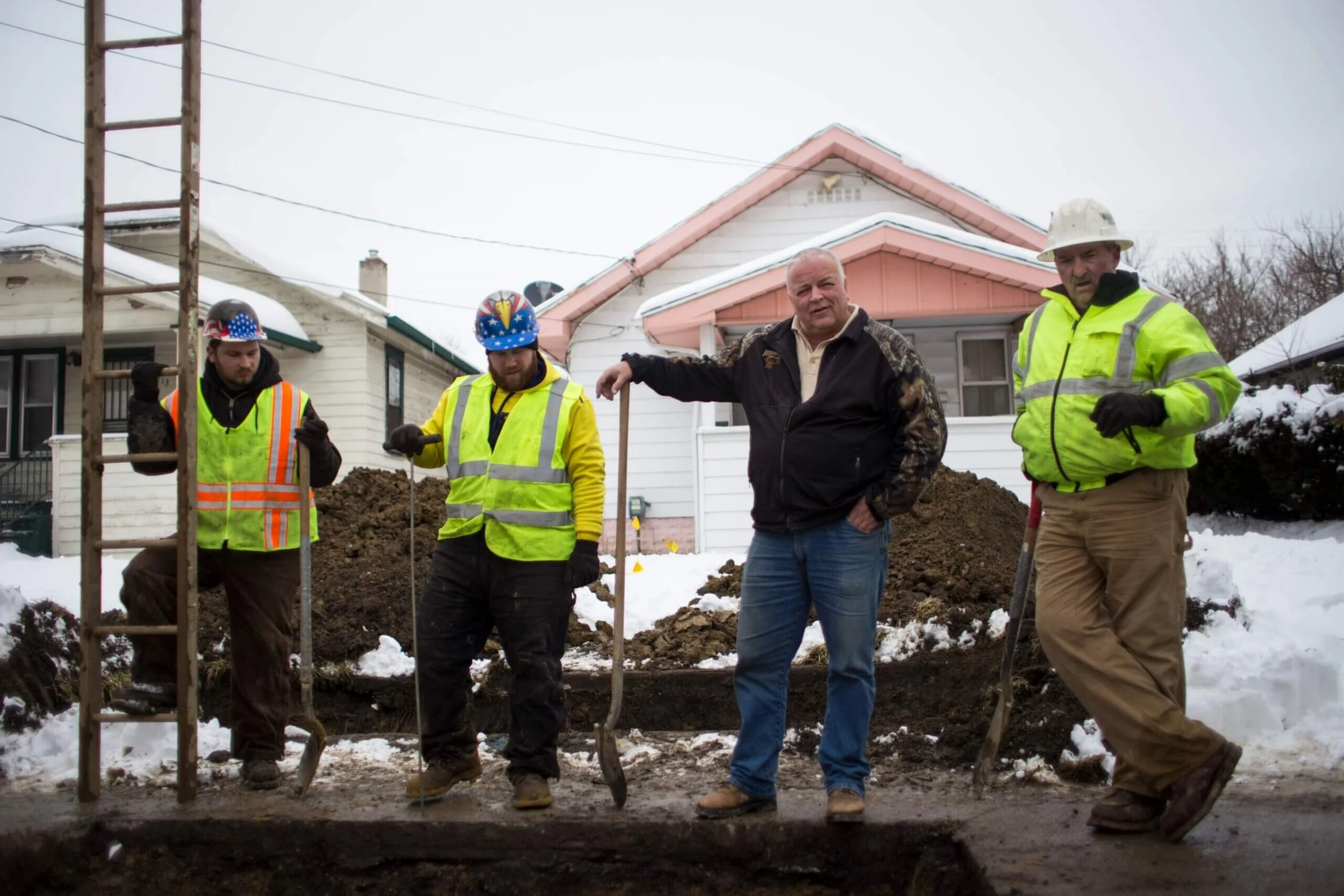
The Fast Start program, an initiative to replace lead water service lines to Flint homes, is officially launched.
-
Mar 31 2016
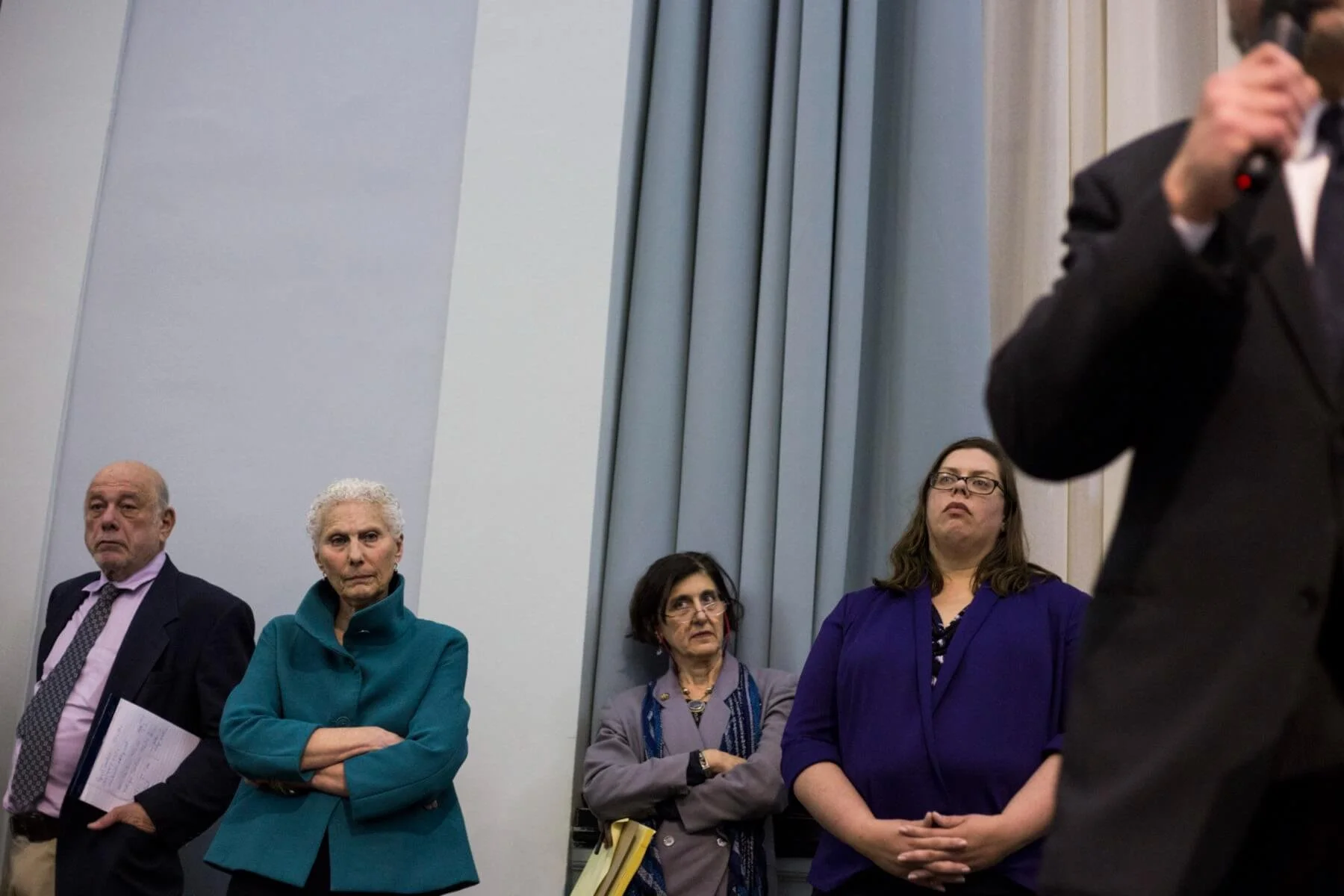
Lawfirm Cohen Milstein files an initial lawsuit in federal court agaisnt several state and private entities claiming responsibility in the Flint water crisis. Several additional law firms join as an interim co-counsel and the lawsuit goes on to spend 5 years in litigation and multiple amendments are made.
-
Apr 11 2016
State health officials recognize that 12 people have died in connection with a 2014 -2015 Legionnaires outbreak. However, the total fatalities remain unknown as some individuals were diagnosed with pneumonia or other respiratory illnesses. A study later asessed the outbreak was caused by low chlorine levels.

-
Nov 10 2016
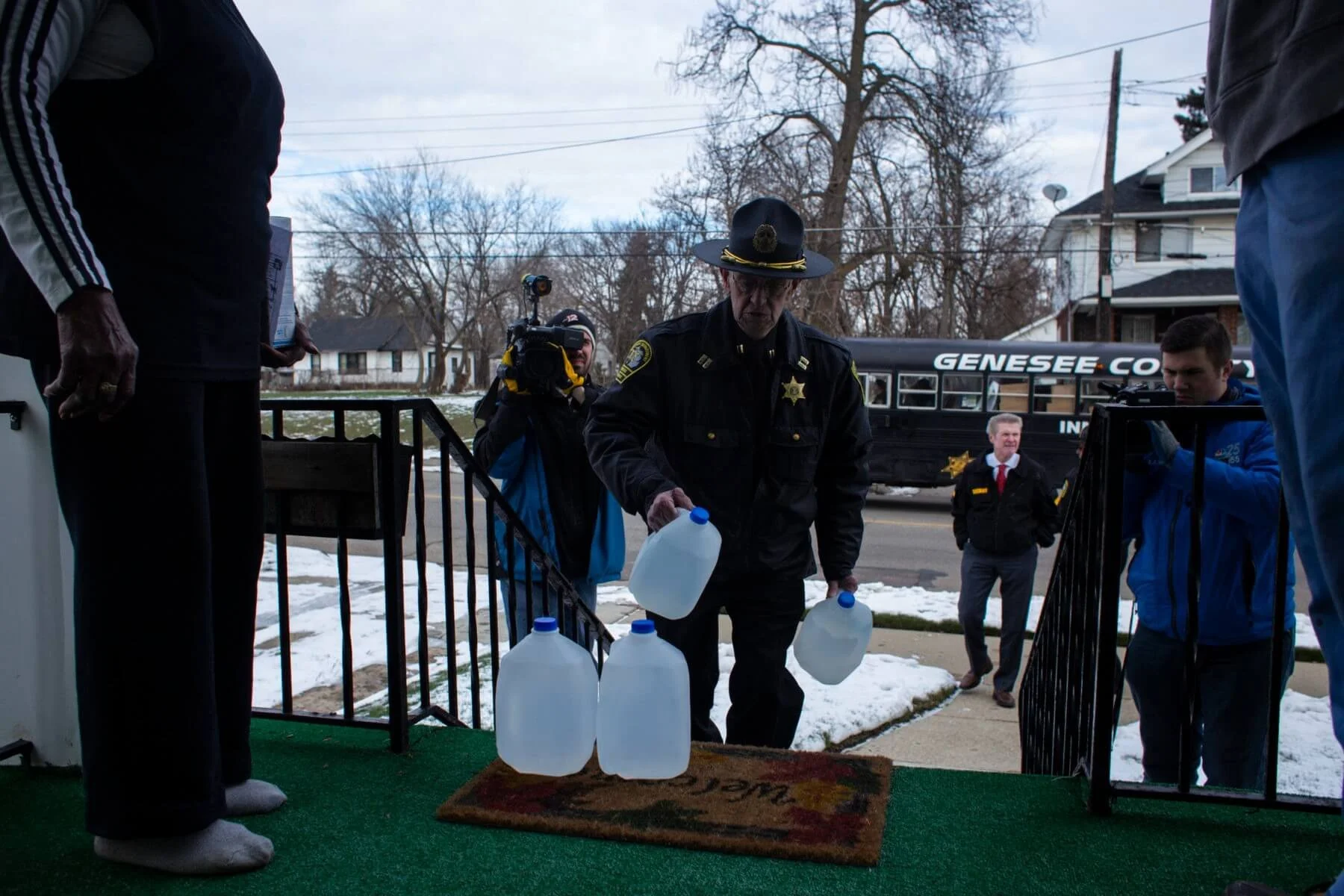
A district court judge rules that local officials must deliver bottled water to Flint residents if the household does not have an operational water filter.
-
Dec 10 2016
The Senate approves $100 million in funding for Flint to address lead contamination. Much of the funds remain unspent.
-
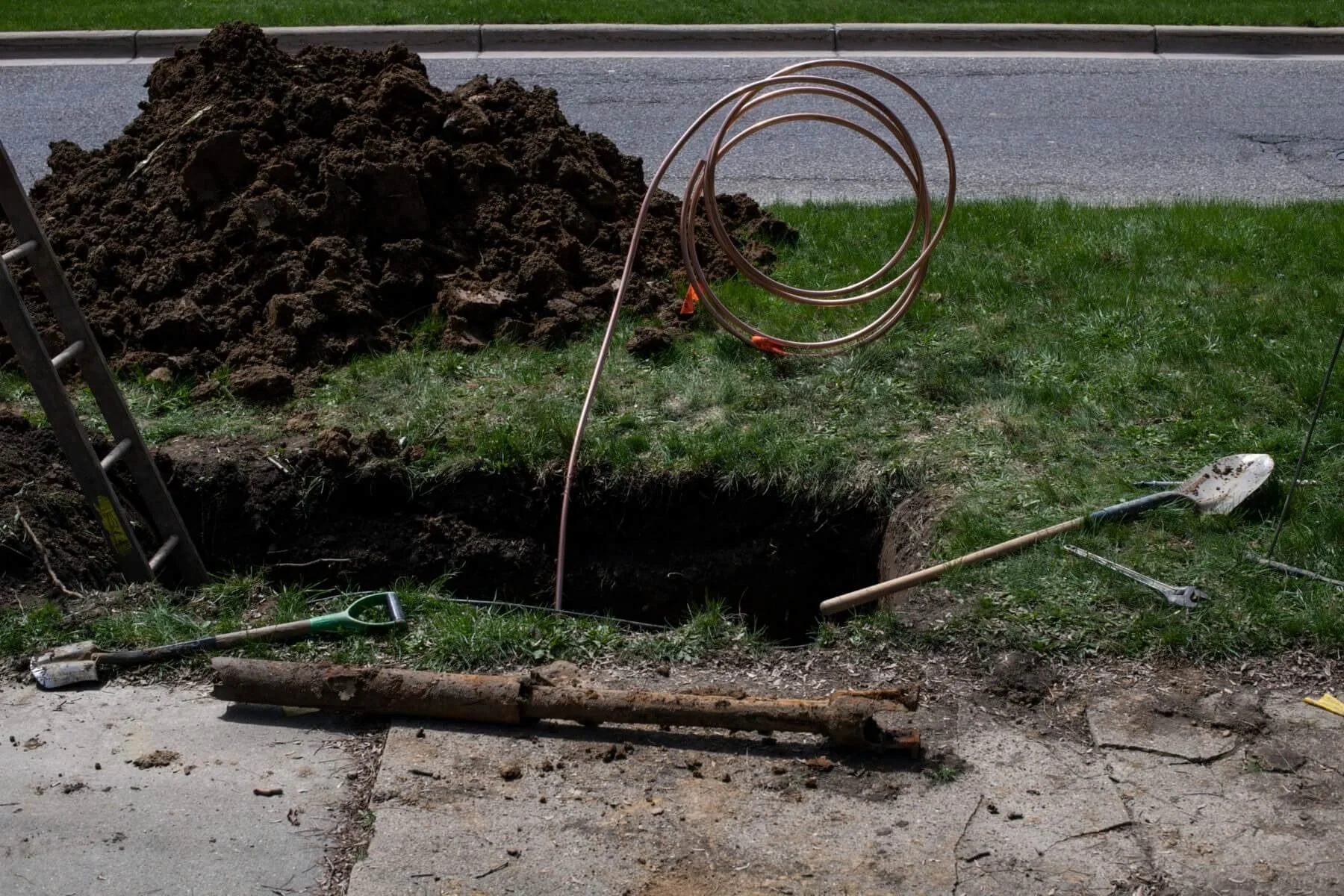
Jan 24 2017
The MDEQ reports that Flint’s water is below 15 ppb for lead, the federal action limit. However, they recommend residents continue using bottled water until lead service lines are replaced. This project is still ongoing.
-
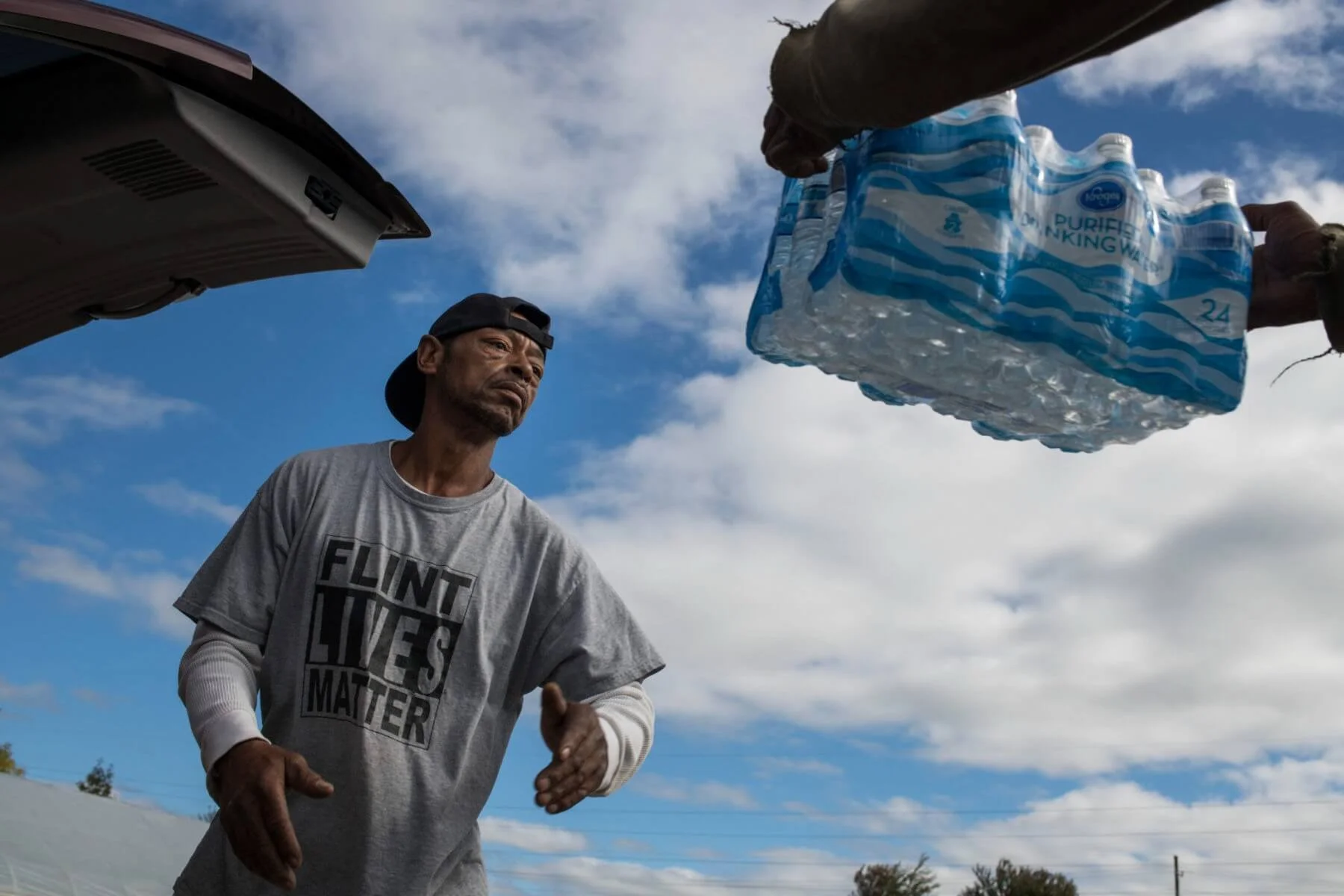
Apr 06 2018
Governor Rick Snyder announces that free bottled water distribution will end in Flint, citing the MDEQ’s reports that Flint had met testing standards for four six month periods consecutively.
-
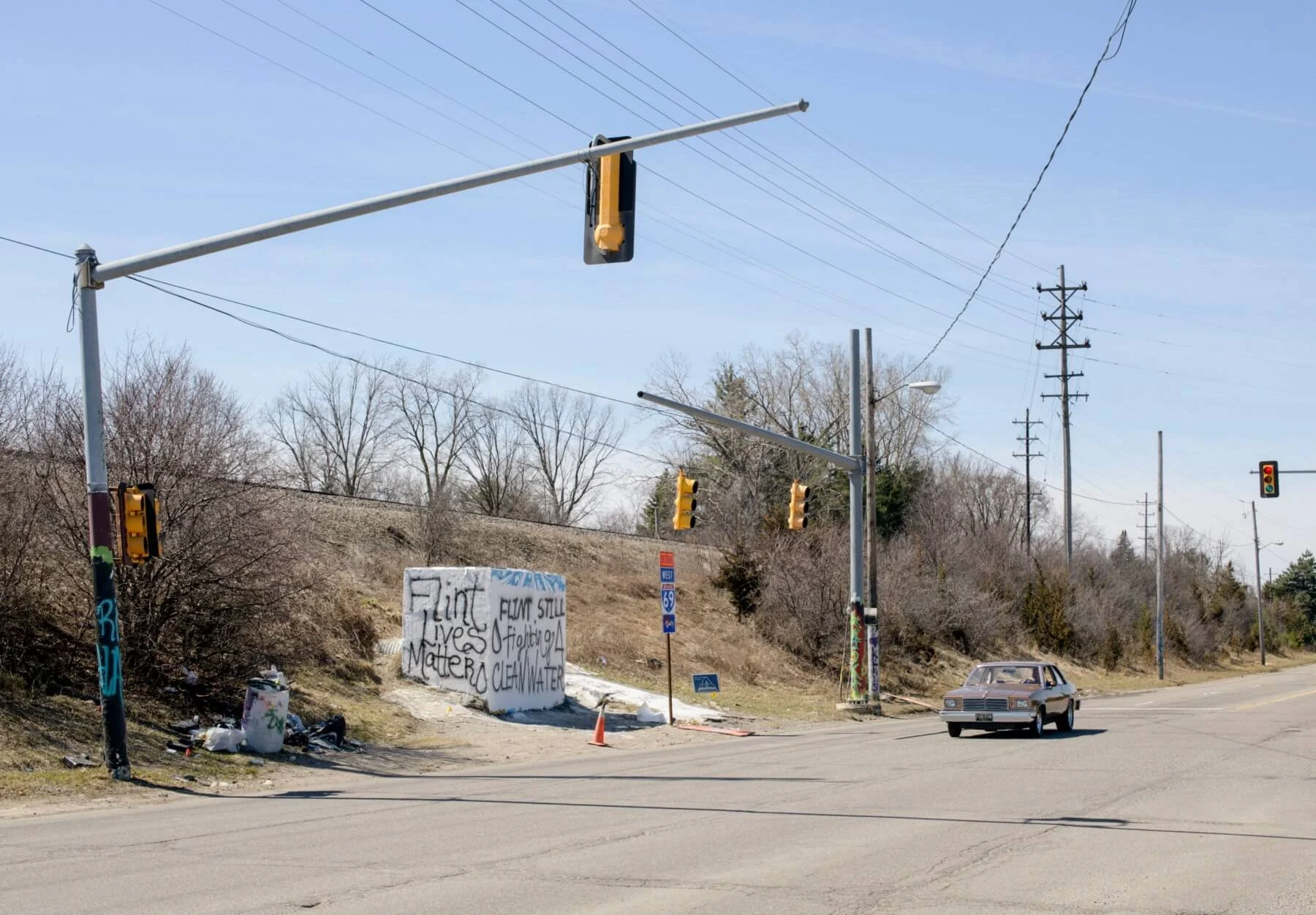
Apr 18 2019
A federal judge rules that the residents of Flint are able to sue the federal government concerning Flint’s water crisis. This amendment widens possible defendants in the 2016 class action lawsuit to include top government officials.
-
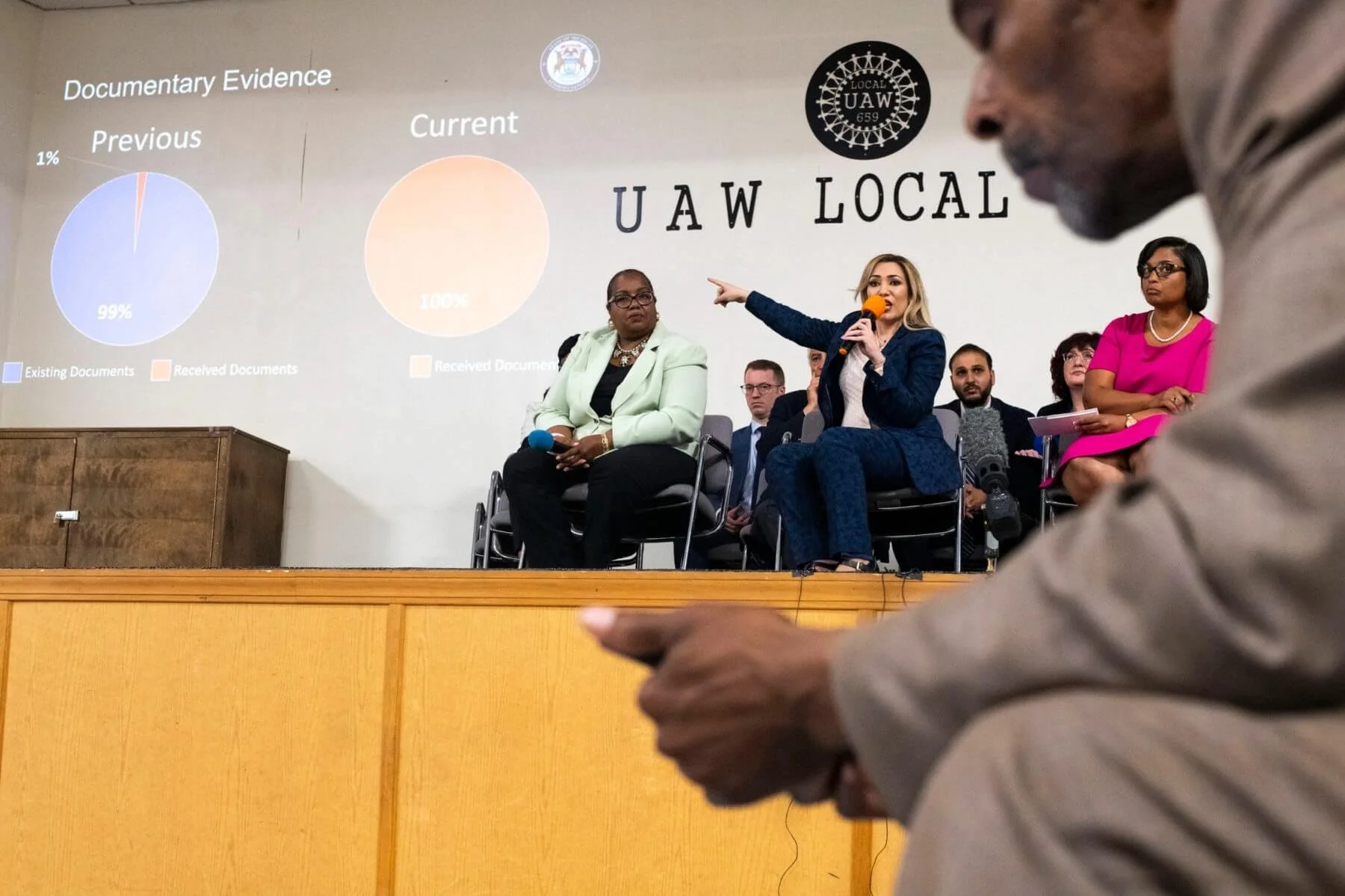
June 13 2019
Under a new attorney general, state prosecutors announce they will be dropping all criminal charges filed against state and local officials and will start their investigation from scratch. The team cited concerns for how evidence was collected for the investigation, calling it incomplete.
-
Oct 10 2019
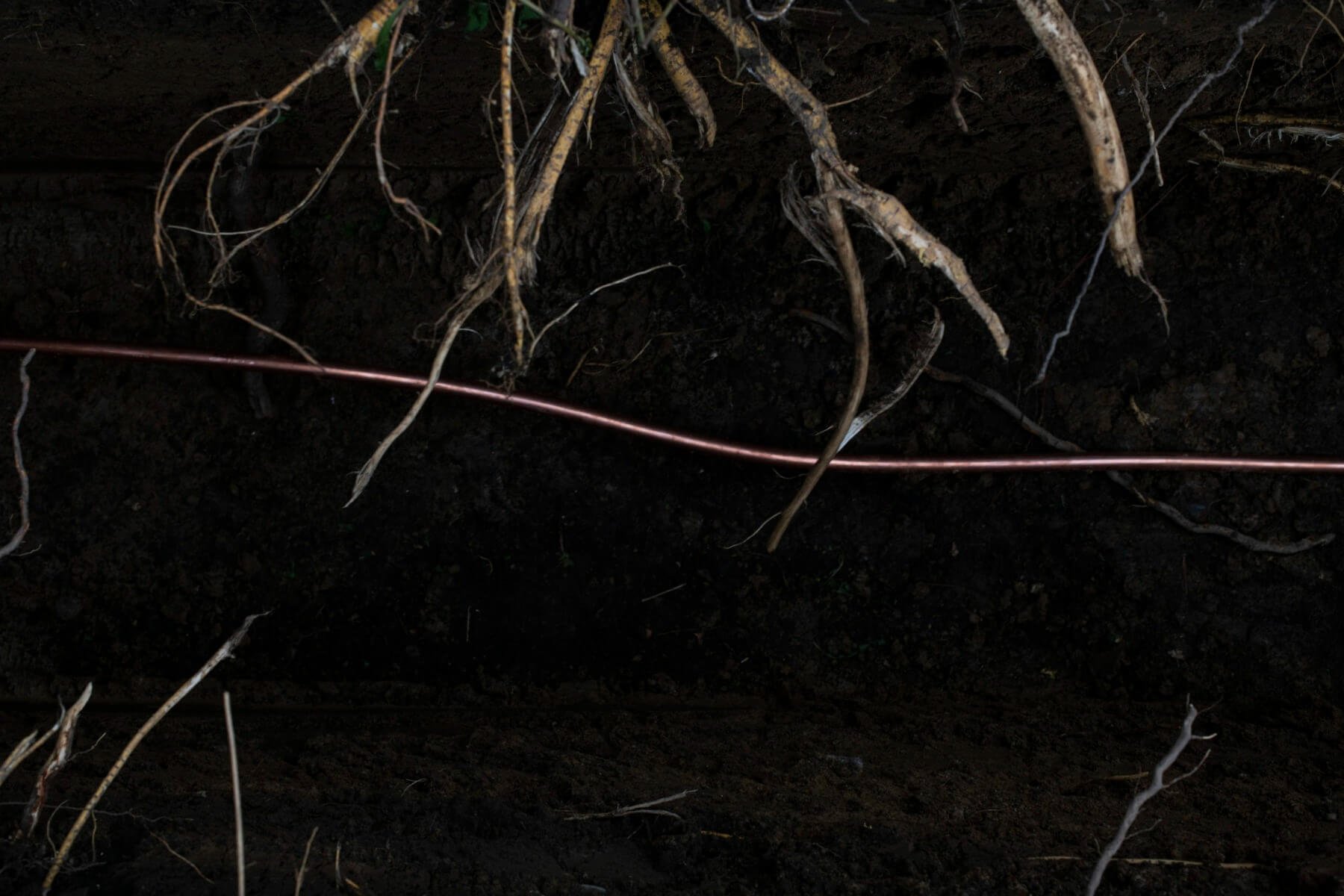
The EPA announces proposed changes to the Lead and Copper rule. The changes would apply to testing for when and if municipalities find lead levels above the allowable limit, remaining at 15ppb, and would change the response time for lead pipe replacement within communities impacted. However, according to both the EPA and the CDC the contaminant level goal is 0ppb and no known amount of lead in drinking water is considered safe.
-
Mar 20 2020
The first known cases of COVID-19 are announced by the Genesee County health officer.
-
Apr 08 2020
Genesee County reports 14 COVID-19 related deaths, one of the highest daily totals in the first initial wave of cases according to data provided by the State of Michigan.
-
Aug 20 2020
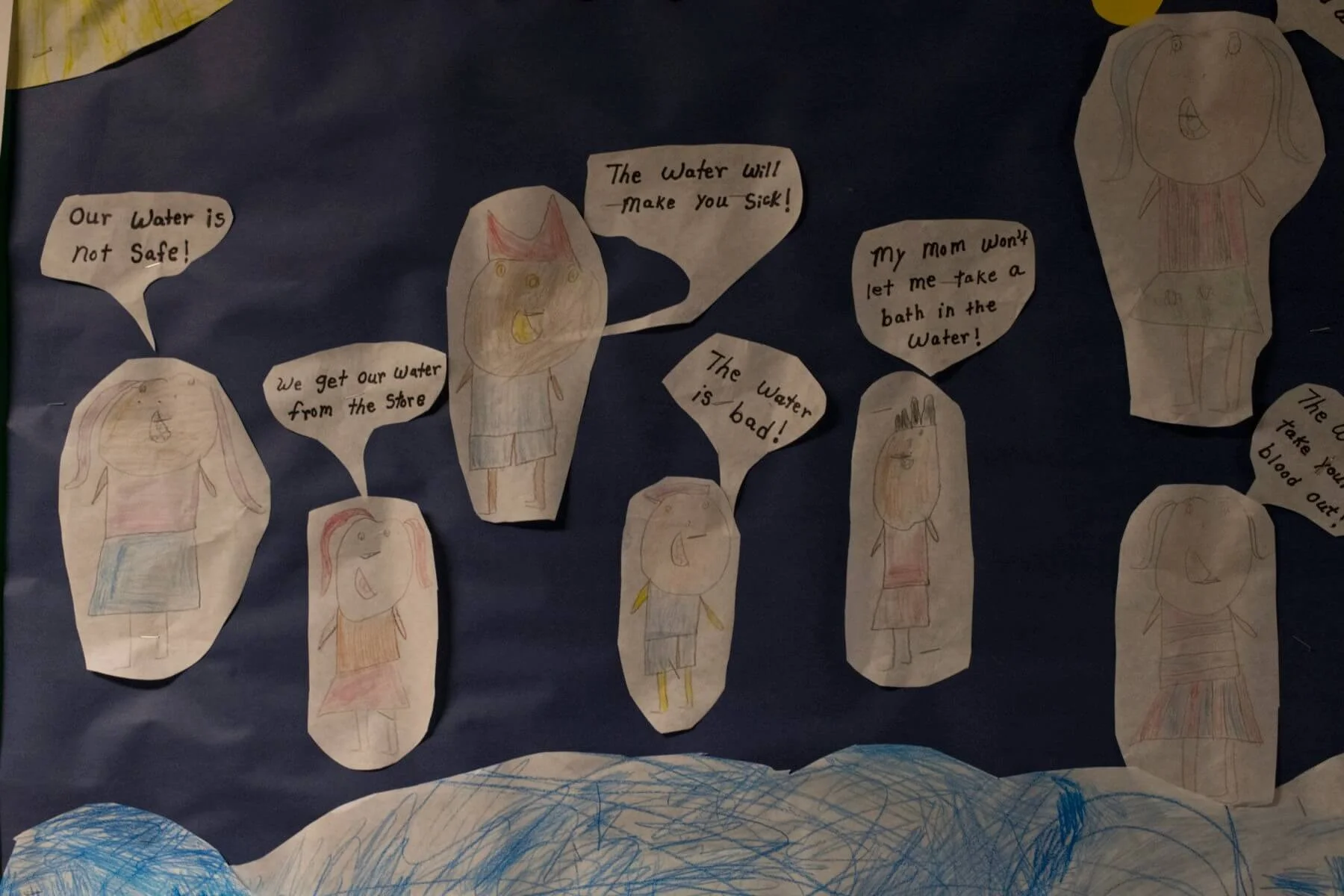
A preliminary settlement for $600 million is reached in a civil lawsuit for residents impacted by Flint’s water crisis, primarily children.
-
Nov 17 2020
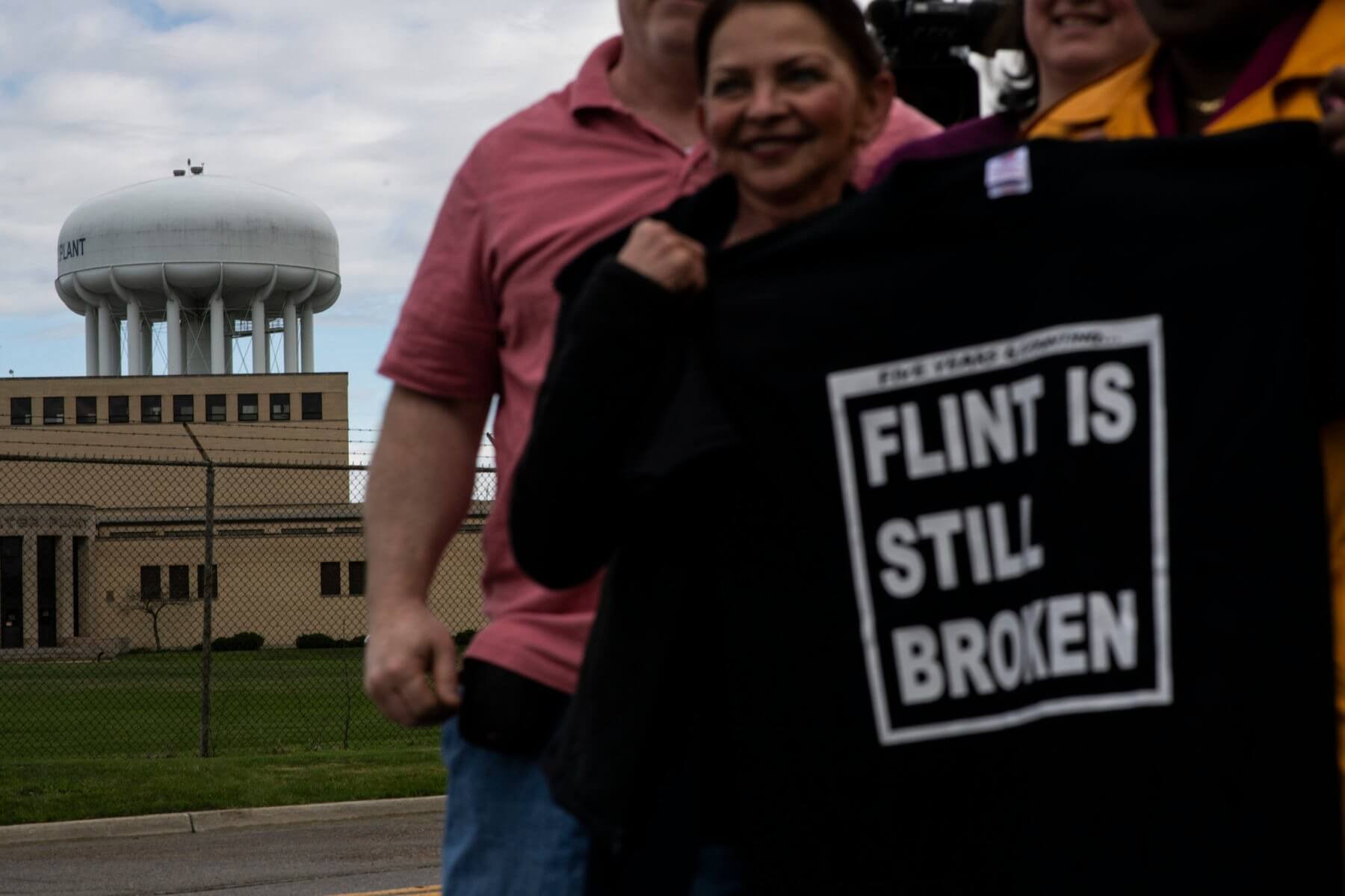
An agreement for $641.25 million, potentially the largest in the State of Michigan’s history, is reached on behalf of Flint residents, mostly those under 18, who were impacted by Flint’s water. According to the settlement terms, “The Fund will also provide local school districts and public school academies within the Genesee Intermediate School District with financing to provide special education services for students who lived in Flint during the Exposure Period and who require such services.” The total legal fees remains unknown but is capped at one-third of the settlement. The majority of funds, 79.5 perecent, is set aside for children impacted.
About
Born in Houston, Texas, Brittany Greeson spent the majority of her childhood between the great heights of the Appalachian Mountains in North Carolina and the rolling hills of Western Kentucky. Growing up in the South taught her to appreciate the quirks and little instances of beauty in the world. She is a photojournalist based in Detroit, Michigan. She has interned for The Oregonian, The Roanoke Times, The Flint Journal, and The Washington Post. Her work has been recognized by the Hearst Foundation, the Scripps Howard Foundation, College Photographer of the Year, the National Press Photographers Association, and the Kentucky News Photographers Association. She has also had the privilege of working with Reuters, The New York Times and CNN. In 2014 she was an International Photojournalism student at The Danish School of Media and Journalism in Aarhus, Denmark. She is a graduate of Western Kentucky University where she received her degrees in Sociology and Photojournalism. She has been featured as an Emerging Photographer with GroundTruth for her coverage of the Flint water crisis. In 2017, she was a fellow with GroundTruth on the Crossing the Divide reporting project.
+1 270 925 7209
e: brittgreeson@gmail.com
Instagram: @brittanygreeson
Words & Photographs
Brittany Greeson
Graphic Design
John Lee
Studio Durational
Web Development
Alex Wen
Director of Exhibitions
Annalise Flynn-Taylor
ART WORKS Projects
Generous Support for ART WORKS Projects is provided by
The MacArthur Foundation, The Conant Family Foundation, and The Henry Nias Foundation.